••
Insights & Resources
Expert strategies, case studies, and best practices for B2B marketing teams.
Expert strategies, case studies, and best practices for B2B marketing teams.
Ask Claude anything about your LinkedIn Ads, website visitors and CRM deals. DemandSense MCP
Private early access
Tools & Comparisons
Dreamdata’s pitch is depth: seven attribution models, account-level journey mapping across every stakeholder, and native LinkedIn Conversions API access that goes beyond basic click tracking.
That depth comes with real friction. Users on G2 consistently describe a steep learning curve around stage models and UTM mapping, and setup measured in weeks rather than days. The cost shows up fast too — Dreamdata gates its full tier behind a demo and an annual contract, with median contracts around $35,440 per year across 24 verified purchases, though that is a small sample and should be read as a directional anchor rather than a price list.
Whether you are here because of the configuration time, the contract, or you simply want something narrower and faster to stand up, here are seven alternatives worth comparing.
Our top three picks:
| Tool | Best for |
|---|---|
| DemandSense | Teams that want LinkedIn ad spend tied directly to closed revenue, on published pricing rather than an annual contract |
| Factors.ai | Teams that want multi-touch attribution across channels at a lower entry cost |
| HockeyStack | Teams that want deal-level journey mapping and can absorb a steeper price and learning curve |
Dreamdata is a B2B attribution and go-to-market activation platform. It unifies ad data, CRM activity, website behaviour, and revenue records into a single account-level buyer journey, built for long, multi-stakeholder B2B sales cycles.
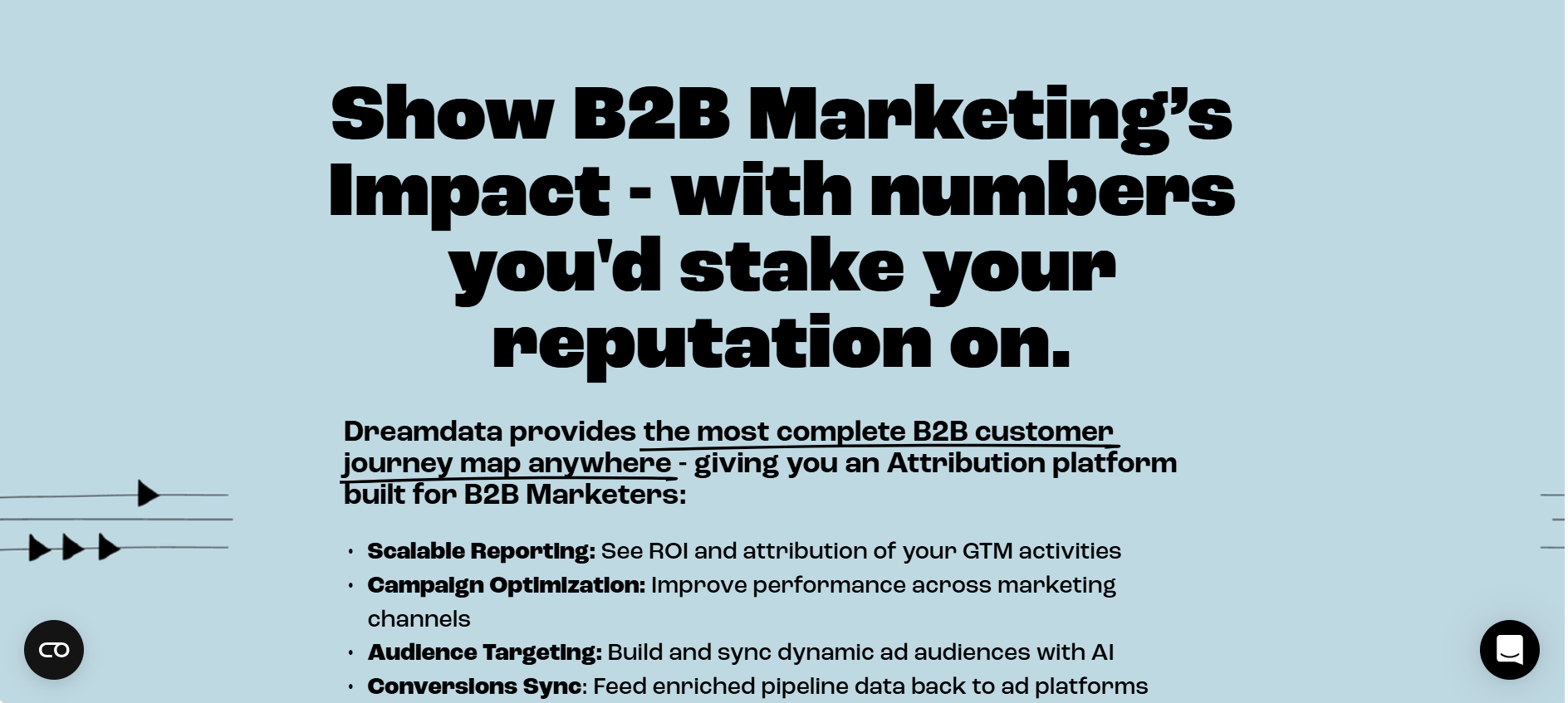
1. The purchasing experience is a barrier. Getting access to Dreamdata’s full multi-touch attribution and revenue analytics means signing an annual contract, with no standard proof-of-concept period first. Contracts are billed annually and don’t auto-renew, but mid-term downgrades aren’t allowed.
2. Time to value runs in weeks, not days. Third-party pricing research puts implementation at 2–3 weeks of data integration at the low end, while independent reviews of the platform put realistic setup closer to four to eight weeks of marketing ops time once stage models and UTM mapping are factored in. Either way, for teams that need attribution answers inside a quarterly budget cycle, that lag can outlast the window it’s meant to inform.
3. Reporting flexibility hasn’t kept pace with the price tag. Missing custom dashboards, difficulty building custom reports, and limited real-time data show up repeatedly in user reviews. For a platform in the five-figure annual range, that’s a meaningful gap between cost and reporting control.
4. Adoption takes sustained effort, not a quick onboarding. Understanding stage models, UTM mapping, and attribution configuration is widely described as a steep learning curve, which pushes the real cost of adoption well beyond the subscription price. If your team is weighing that effort against what you actually need, our guide to multi-touch attribution for B2B is a useful sanity check before you commit.
5. Pricing is largely demo-gated. Dreamdata publishes a free tier and third parties report an entry paid tier in the region of $750/month, but the Advanced tier that carries the attribution and activation features is custom-quoted only. A buyer has no way to confirm their real number without entering a sales process, which makes early comparison shopping difficult. Reviewers also note the pricing is out of reach for smaller businesses.
Here is a quick overview of the top 7 Dreamdata alternatives:
| Tool | Best for | Core strength | Why choose it over Dreamdata | G2 rating | Pricing |
|---|---|---|---|---|---|
| DemandSense | Teams that need LinkedIn ad spend tied to closed revenue without a locked-in annual contract | Fast signals for the weekly budget call, attribution to prove the outcome — plus website visitor identification in the same platform | Dreamdata requires an annual contract with no proof-of-concept period. DemandSense publishes its price and includes a 30-day free trial | 5/5 | $89/mo Base, $149/mo Plus (500 credits) — 30-day free trial |
| Factors.ai | Teams that want multi-channel attribution at a fraction of Dreamdata’s entry cost | Attribution across website, CRM, LinkedIn and G2 engagement, with a permanent free tier | Published entry pricing and a free tier to test before paying anything | 4.5/5 | Free tier; Starter from ~$399/mo, add-ons push higher tiers past $2,000/mo |
| HockeyStack | Teams that want deal-level journey detail and can absorb a steeper price | Buyer journey visualisation down to individual deals, including pre-form-fill activity | More granular, deal-level journey inspection than Dreamdata’s account view | 4.6/5 | No public pricing; reported ~$1,400–$2,200/mo |
| Adobe Marketo Measure | Enterprise teams already embedded in the Adobe and Marketo ecosystem | Native Salesforce and Marketo integration with multiple attribution models in parallel | Fits an Adobe-centric stack without the extra integration work Dreamdata needs for the same systems | 4.7/5 | Custom, enterprise only |
| CaliberMind | Enterprise account-based teams that need lifecycle management alongside attribution | Account lifecycle, scoring and routing combined with attribution in one platform | Adds lifecycle and routing capabilities Dreamdata doesn’t treat as core features | 4.5/5 | Custom, not publicly listed |
| Ruler Analytics | Teams whose revenue arrives through calls and forms, not just digital clicks | Closed-loop tracking connecting calls, forms and live chat directly to CRM revenue | Covers offline and call-based conversion paths more directly than Dreamdata’s digital-first model | 4.6/5 | Tiered by monthly traffic, from ~£199/mo |
| InfiniGrow | Lean teams without a dedicated data or RevOps function | Cleans and unifies GTM data automatically before generating attribution reports | Reduces the internal setup burden that stretches Dreamdata’s onboarding | 4.7/5 | Not publicly listed |
Below is a closer look at each one.
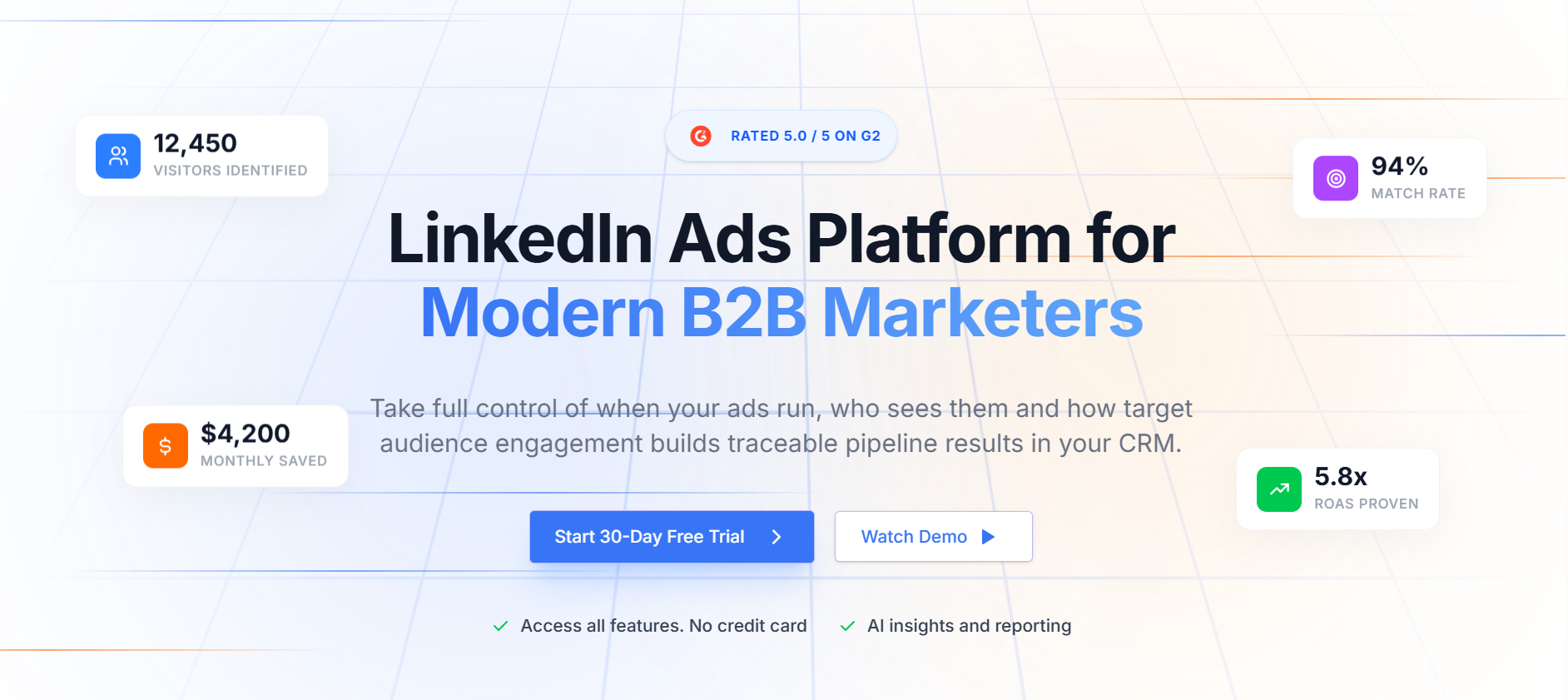
Dreamdata’s account-level journey mapping is genuinely thorough, but getting there takes weeks of configuration — particularly for teams without a marketing ops resource. DemandSense trades that setup time for a different premise: better decisions now, proven outcomes later.
That distinction matters more than it sounds. If your sales cycle runs three months or longer and you close a handful of deals a year, pure revenue attribution can’t tell you whether this month’s campaign is working — the answer arrives a quarter after the budget decision. So DemandSense reads the fast signals first: which companies are on your site, how engaged they are, how well they match your ICP, which job titles your spend is actually reaching. Those signals tell you where to move budget this week. Attribution then confirms, over the full cycle, whether the call was right.
Where DemandSense beats Dreamdata
G2 Rating: 5/5 Pricing: $89/mo Base, $149/mo Plus — 30-day free trial on both
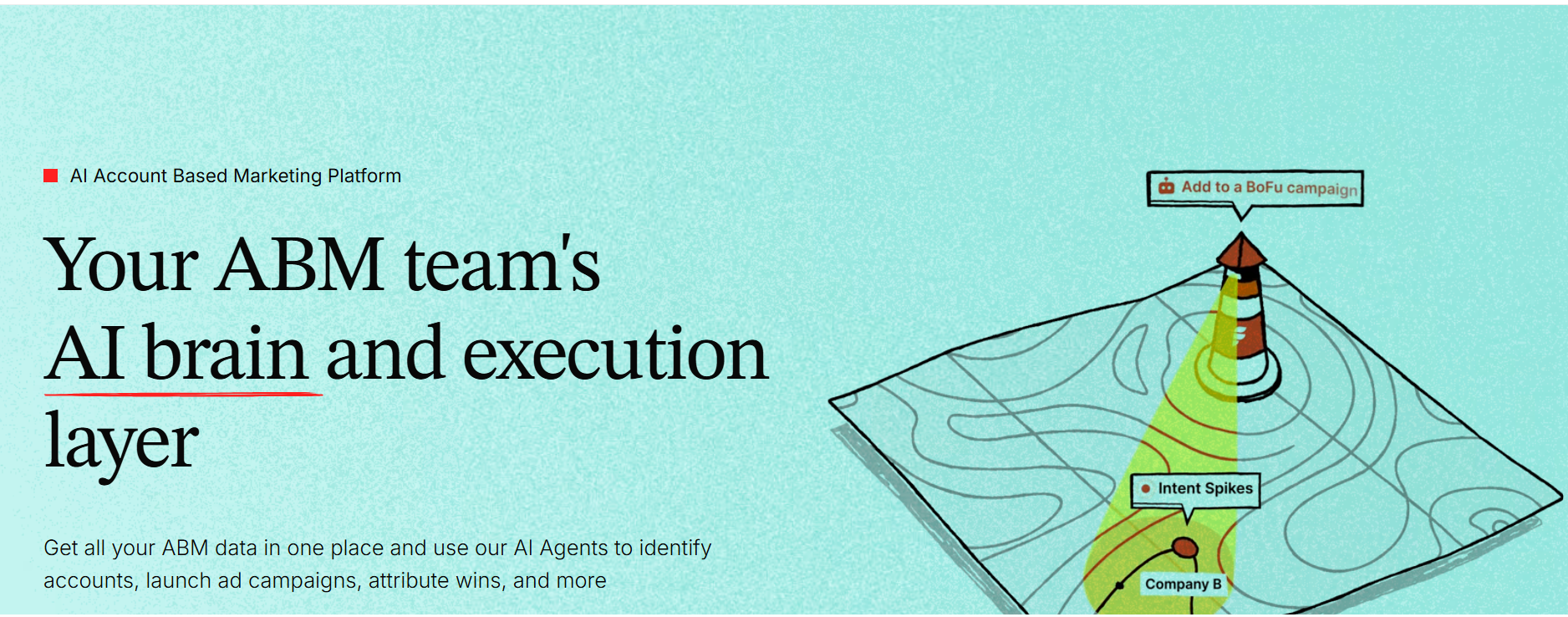
Factors.ai covers much of the same ground as Dreamdata — multi-touch attribution, intent signals, account scoring across website, CRM, LinkedIn and G2 engagement — at a meaningfully lower entry price. It also runs a permanent free tier, so teams can test real functionality before paying anything.
Where Factors.ai beats Dreamdata
Watch for: add-ons stack quickly. Interest Groups and ad-platform integrations can push a real Factors.ai bill past $2,000/month, so price the configuration you actually need rather than the headline tier.
G2 Rating: 4.5/5 Pricing: Free tier available; Starter from ~$399/mo, with add-ons pushing higher tiers past $2,000/mo
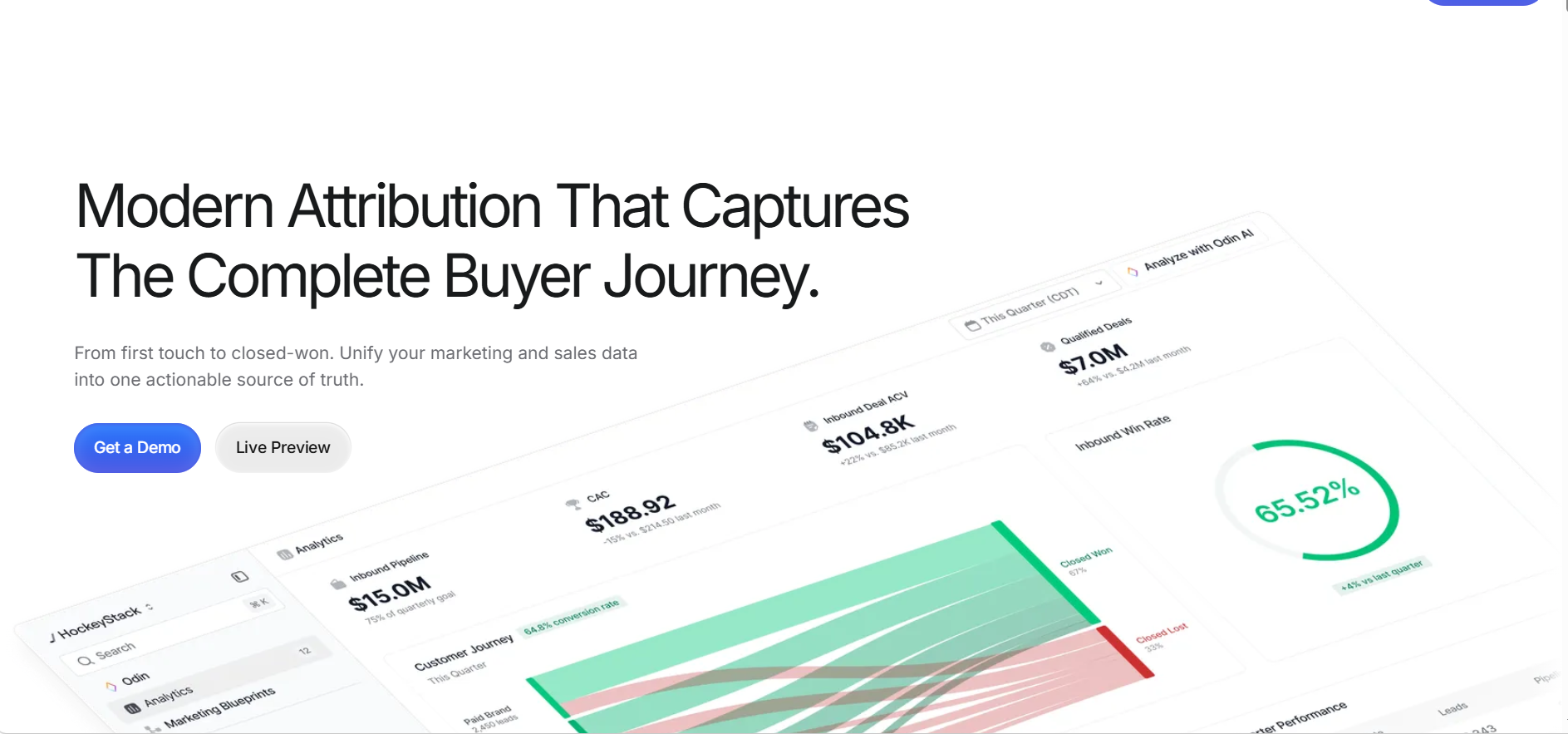
Where Dreamdata maps the account-level journey, HockeyStack goes a layer deeper, tracing individual deal paths from first anonymous visit through to closed revenue, including pre-form-fill activity. It carries its own learning curve, but for teams that need to inspect specific opportunities rather than aggregate trends, that granularity is the draw.
Where HockeyStack beats Dreamdata
Watch for: HockeyStack is the more expensive option of the two, and its most-cited G2 criticism is the same one levelled at Dreamdata — a steep learning curve.
G2 Rating: 4.6/5 Pricing: No public pricing; reported entry around $1,400/mo, rising to roughly $2,200/mo with add-ons
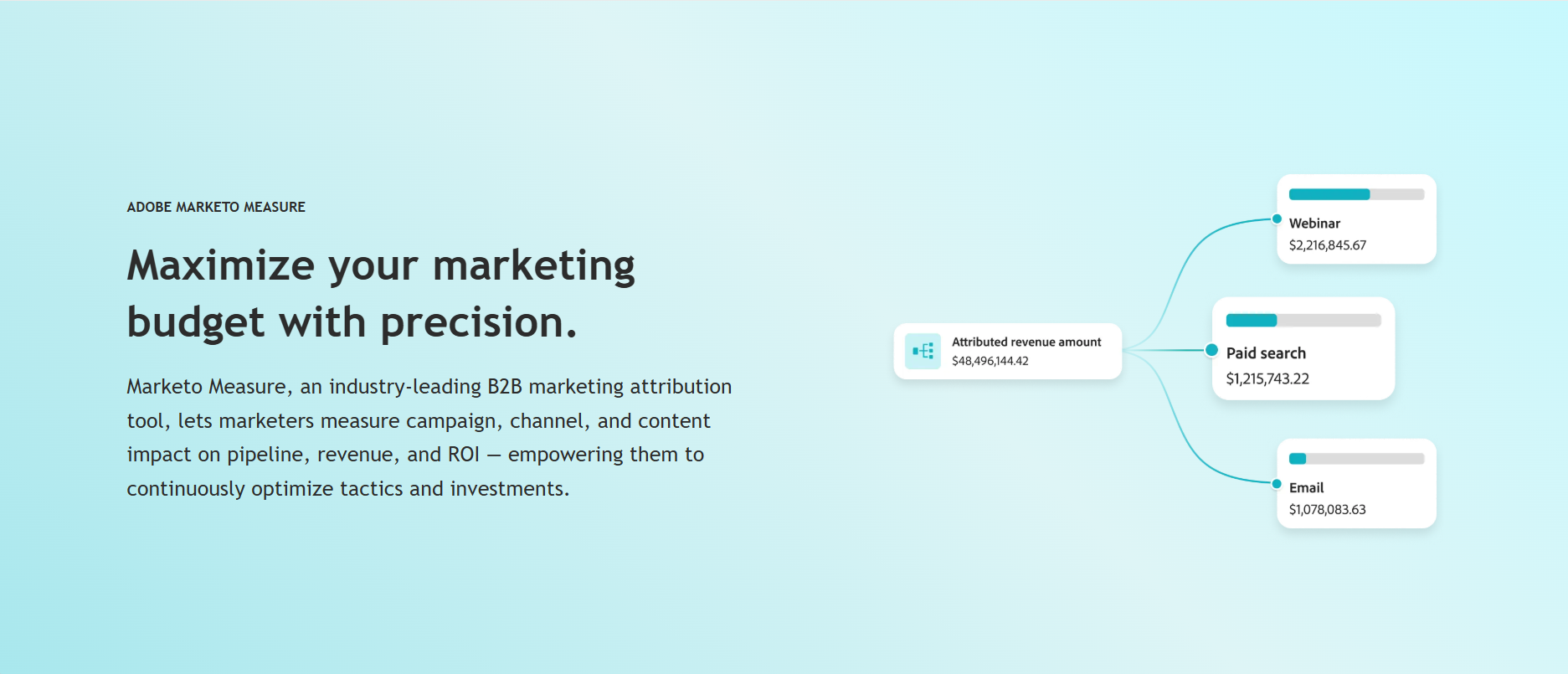
For enterprise teams already running Marketo and Salesforce, Adobe Marketo Measure plugs in natively without the extra integration work Dreamdata requires to sit alongside the same systems. It runs multiple attribution models in parallel, which suits teams that need to compare methodologies rather than commit to one.
Where Adobe Marketo Measure beats Dreamdata
Watch for: the value depends almost entirely on already being an Adobe shop. Outside that stack, the integration advantage disappears. Teams weighing CRM-native attribution instead may find our comparison of multi-touch attribution in Salesforce and HubSpot more directly useful.
G2 Rating: 4.7/5 Pricing: Custom, enterprise pricing only
CaliberMind extends beyond what Dreamdata treats as core scope, folding account lifecycle management, lead routing and scoring into the same platform as attribution reporting. For enterprise ABM teams that want one system managing the full account relationship instead of stitching attribution to a separate lifecycle tool, that’s the differentiator.
Where CaliberMind beats Dreamdata
Watch for: it’s built for enterprise ABM teams with the operational maturity to use lifecycle management, which is a different buyer from a lean team that just needs its ad spend explained. If measuring account-based marketing is the actual problem, that’s the frame to evaluate it in.
G2 Rating: 4.5/5 Pricing: Custom, not publicly listed
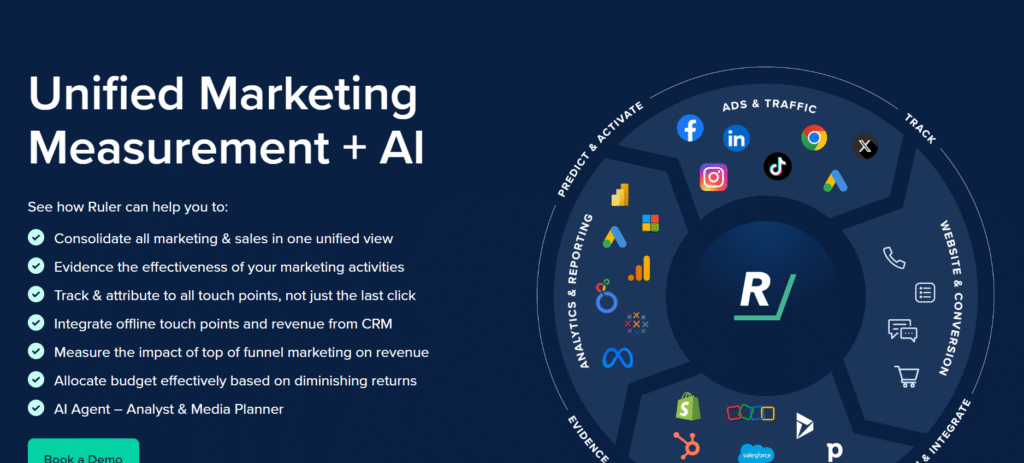
Dreamdata’s model leans digital-first. Ruler Analytics fills the gap that leaves — closed-loop tracking that connects phone calls, form fills and live chat directly to CRM revenue, which matters for any B2B team where a meaningful share of pipeline starts with a phone conversation rather than a web form.
Where Ruler Analytics beats Dreamdata
Watch for: pricing scales with monthly website traffic, so a high-traffic site can land well above the entry tier.
G2 Rating: 4.6/5 Pricing: Tiered by monthly traffic, starting around £199/mo for smaller sites and rising steeply with volume
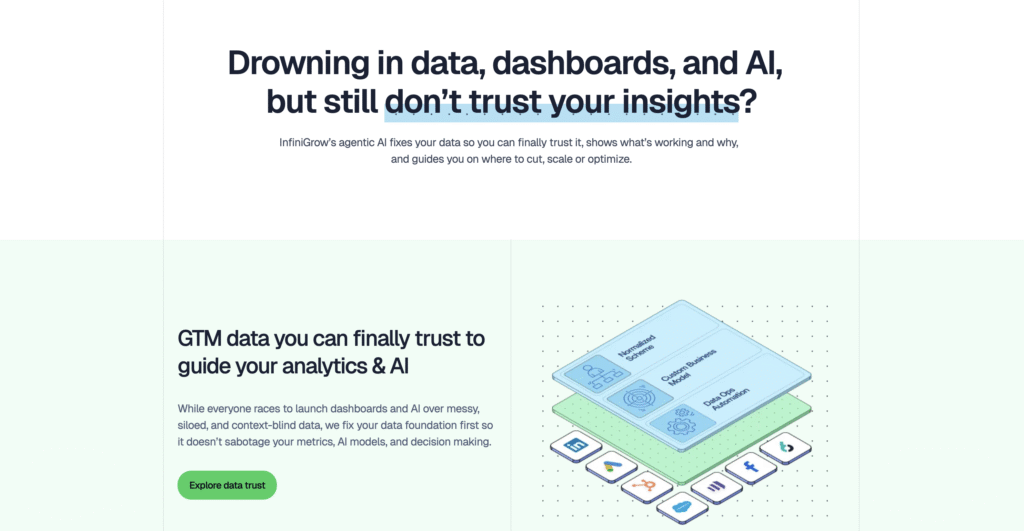
Dreamdata’s setup time often comes down to messy underlying GTM data that has to be reconciled before attribution models run reliably. InfiniGrow tackles that problem first — cleaning and unifying data automatically, then layering attribution and natural-language reporting on top — aimed at teams without a RevOps function to do that cleanup manually.
Where InfiniGrow beats Dreamdata
Watch for: no public pricing, so you’re back in a demo process to find out what it costs.
G2 Rating: 4.7/5 Pricing: Not publicly listed
Choose DemandSense if you want to:
You should look at Dreamdata alternatives generally if you:
Doesn’t Dreamdata’s account-level journey mapping give a fuller picture than DemandSense?
For teams that need every channel mapped across a full buying committee, that breadth is real and worth acknowledging. The tradeoff is time and commitment: reaching that mapping requires an annual contract with no proof-of-concept period, and configuration typically takes weeks, often with a dedicated marketing ops resource. DemandSense answers a narrower question — what did LinkedIn spend actually generate in revenue — and gets there on a 30-day free trial instead of a year-long commitment.
Doesn’t Dreamdata’s free plan make it cheaper to start with than DemandSense?
Dreamdata’s free plan is real, but it’s capped at 2 months of data history and excludes the attribution modelling that is the platform’s whole value proposition, so it doesn’t answer the question a team is actually trying to answer. DemandSense starts at $89/month with a full 30-day free trial, so there’s no gap between what’s free and what’s useful.
Does DemandSense make sense for a team that needs full multi-channel attribution?
Not as a replacement for one. DemandSense’s depth is in LinkedIn — engagement, audience quality, spend control and revenue attribution on that one channel. A team that needs a buying journey mapped across events, outbound, organic and paid social beyond LinkedIn will get more out of Dreamdata’s broader account-level model, setup time included.
Our sales cycle is long, and we only close a few deals a year. Is revenue attribution even useful to us?
It’s useful, but on its own it’s slow. If a deal takes three months to close and you close a dozen a year, a pure revenue-attribution model can’t tell you whether the campaign you launched last week is working — you find out a quarter later, long after the budget decision was made, and with too few closed deals for the model to say anything confident. The practical answer is to read the leading signals for the weekly decision (who’s on the site, how engaged they are, how well they match your ICP) and let attribution verify the outcome over the full cycle. That’s the split DemandSense is built around, and it’s the case where the heavyweight platforms fit worst.
How long does it take to get an answer out of DemandSense compared with Dreamdata?
DemandSense installs through Google Tag Manager and connects to your CRM without a developer, so the setup is a matter of connecting accounts rather than modelling stages. Dreamdata’s own onboarding path assumes data integration work measured in weeks. The honest framing is that they’re solving problems of different sizes.
Which Dreamdata alternative is best for a small B2B team?
If the question is specifically about LinkedIn spend, DemandSense and Factors.ai are the two with genuine free entry points and published pricing. If revenue arrives by phone as much as by form, Ruler Analytics is the better fit. HockeyStack, CaliberMind and Adobe Marketo Measure are all enterprise-shaped and priced accordingly. Our roundup of attribution software for B2B LinkedIn advertisers compares the category more broadly.
Get expert insights and strategies delivered to your inbox weekly.
Book a personalized demo and discover how we can transform your B2B marketing.
See a quick demo video
LinkedIn Ads
Tools & Comparisons
DemandSense vs ZenABM compared on account scoring, controls, attribution and real pricing.

Revenue Attribution & Measurement
Tools & Comparisons
DemandSense vs Fibbler compared by the job you are hiring for: use cases, Conversions API, MCP, ad controls, pricing, and what reviewers of both tools say.

Tools & Comparisons
Choose the right B2B customer data platform for better audience & account intelligence. Learn how a CDP empowers your B2B customer data strategy.