
LinkedIn Ads
Tools & Comparisons
Best LinkedIn Automation Tools for B2B Marketing and Ads
Compare LinkedIn automation tools for B2B marketing and ads: what each automates, how it connects to LinkedIn, which CRMs it supports, and what it costs.
Revenue Attribution & Measurement
Tools & Comparisons
Your LinkedIn ads reach a buying committee of six people who never click, and the CRM gives the channel credit for almost nothing. So you go looking for a tool that shows which accounts the ads reached, who came to the site afterwards and what happened to the deal. Factors.ai turns up early in that search. It describes itself as an AI ABM and attribution platform for go-to-market teams, and it covers a lot of ground: account identification, intent from G2 and Bombora, account scoring, attribution across four ad networks, and a LinkedIn module called AdPilot.
On LinkedIn itself the two tools read much the same data. Where they part is in how you get to it. Factors is sold in four tiers with paid prices quoted on a call, and the settings that change LinkedIn delivery sit on its Enterprise tier. DemandSense puts every feature on every plan, from $89 a month.
Factors.ai is an account-based marketing platform for mid-market go-to-market teams. It identifies visiting companies through a waterfall of data providers, layers on intent from G2, Bombora and LinkedIn, scores accounts, and reports first-touch, last-touch and influence attribution across LinkedIn, Google, Meta and Bing. LinkedIn AdPilot adds audience sync, impression control, bulk exclusions, bid scheduling and the Conversions API, spread across its tiers. There is a free tier; Basic, Growth and Enterprise are quoted on a call and typically billed on annual contracts.
DemandSense is a platform for the marketer who runs LinkedIn Ads in a small B2B team. It puts three things in one place that usually live in three separate tools: attribution, optimisation, and website visitor profiling, with an MCP server on top. It identifies the companies on your site and the people behind US visits, measures LinkedIn’s influence on CRM pipeline under thresholds you set, and then acts on that read: four delivery settings Campaign Manager does not offer, spend protection for accounts that already closed, and closed-won deals sent back to LinkedIn with their value. Every feature is on every plan; the plans differ only in monthly credits.
Choose Factors.ai if you run account-based programmes across LinkedIn, Google and review sites, want third-party intent and predictive scoring in the same place, and an annual contract fits how you buy. Choose DemandSense if LinkedIn carries the paid budget and you want the measurement, the delivery settings and the Conversions API working this month, on a monthly plan.
Tick what you need and the table narrows to those rows.
Read the delivery row first if LinkedIn is where the money goes. Read the intent and scoring bullets further down if the programme runs across several channels and a sales team works from the output.
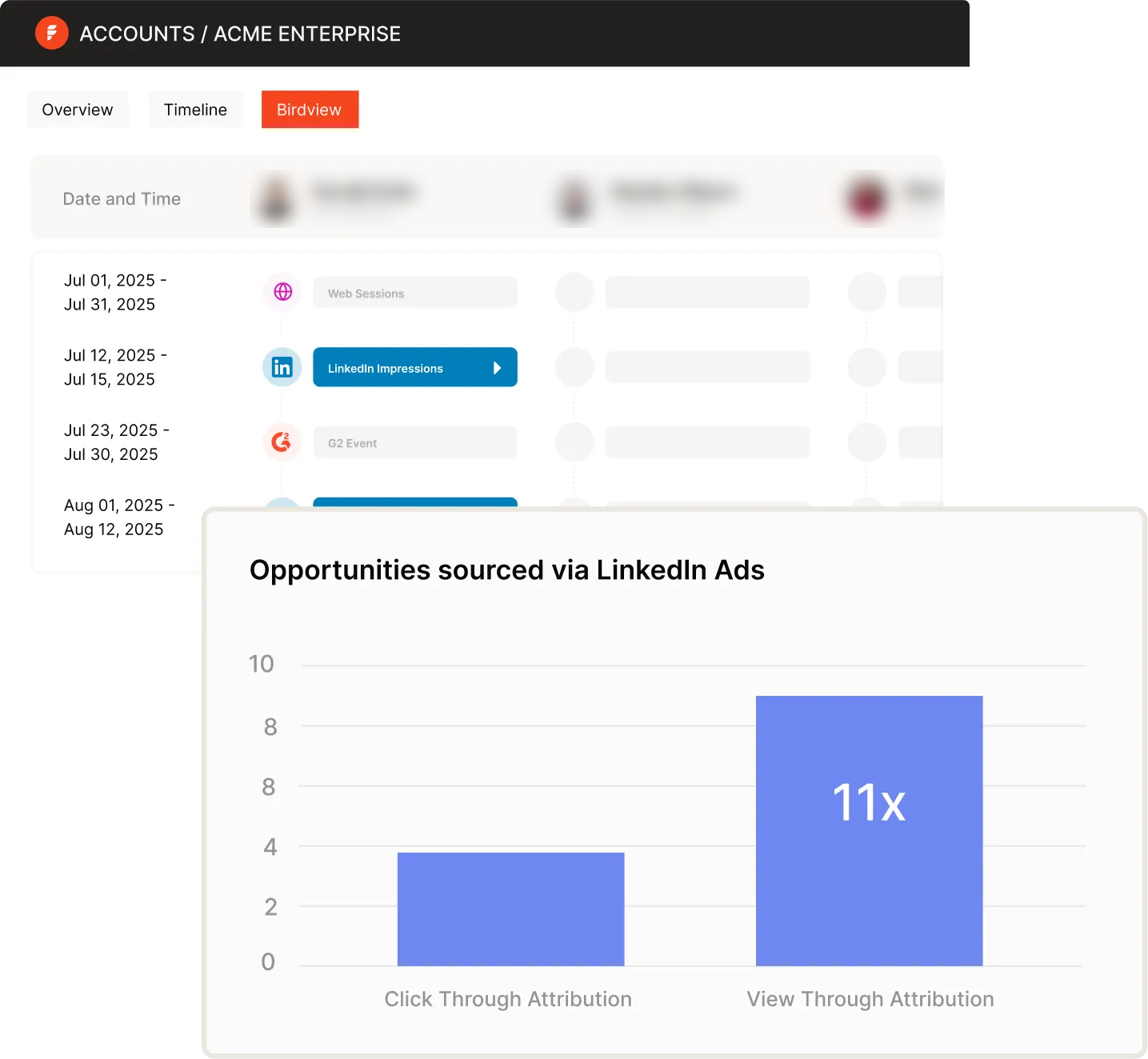
Both are built on the same observation: most LinkedIn influence never shows up as a click. Factors and DemandSense each pull company-level impressions and engagement from LinkedIn, paid and organic, and place them on an account’s timeline next to site visits and CRM deals. Each one reports view-through influence, so a deal that opened after forty impressions and no clicks still has LinkedIn in its history.
The overlap continues past that. Each identifies visiting companies anywhere in the world and, for US traffic, the individual visitor, which in Factors comes as an add-on. HubSpot and Salesforce connect to either one, conversions go back to LinkedIn through the Conversions API, and the data is open to Claude and ChatGPT through MCP. If the question is only whether LinkedIn touched the accounts that became pipeline, either tool will show you.
AdPilot is Factors’ answer to wasted LinkedIn spend. Its impression control caps impressions or clicks per account and excludes an account once it reaches the limit, and bid scheduling, added in June 2026, raises or lowers bids inside a time window. On Factors’ plan table in October 2026, impression control, bulk exclusion and bid scheduling are ticked for Enterprise only, and LinkedIn audience sync starts at Growth.
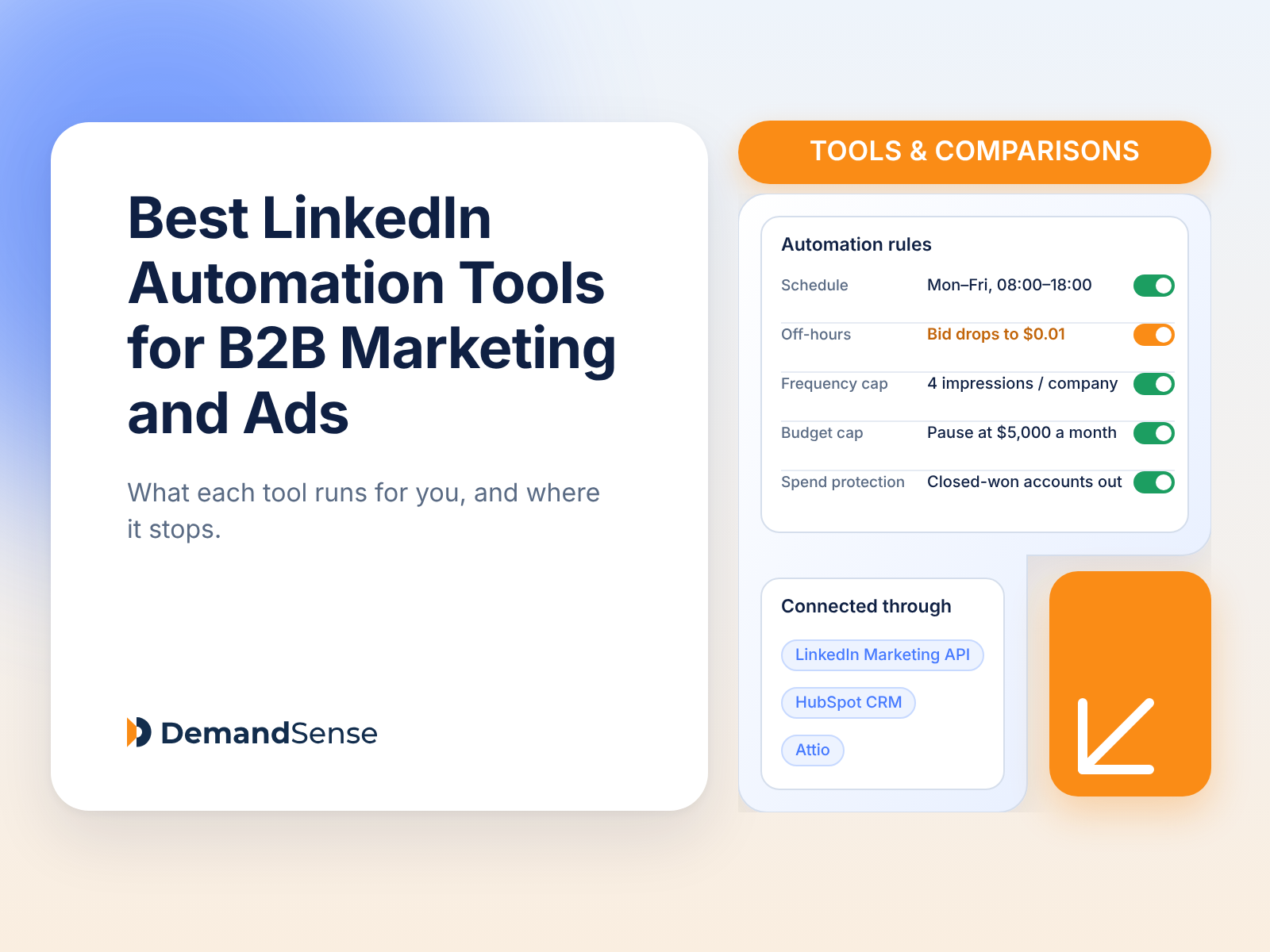
DemandSense carries four LinkedIn ad settings on every plan. The scheduler drops the bid to $0.01 outside your hours instead of pausing the campaign, so LinkedIn’s optimisation history carries through the night. A frequency cap limits how often one company sees your ads, audience tuning shows every job title and company the budget reached and suppresses the ones you do not want, and a monthly ceiling pauses campaigns at your cap and restarts them on the first. Capping and suppression enforce weekly, so plan around that rhythm.
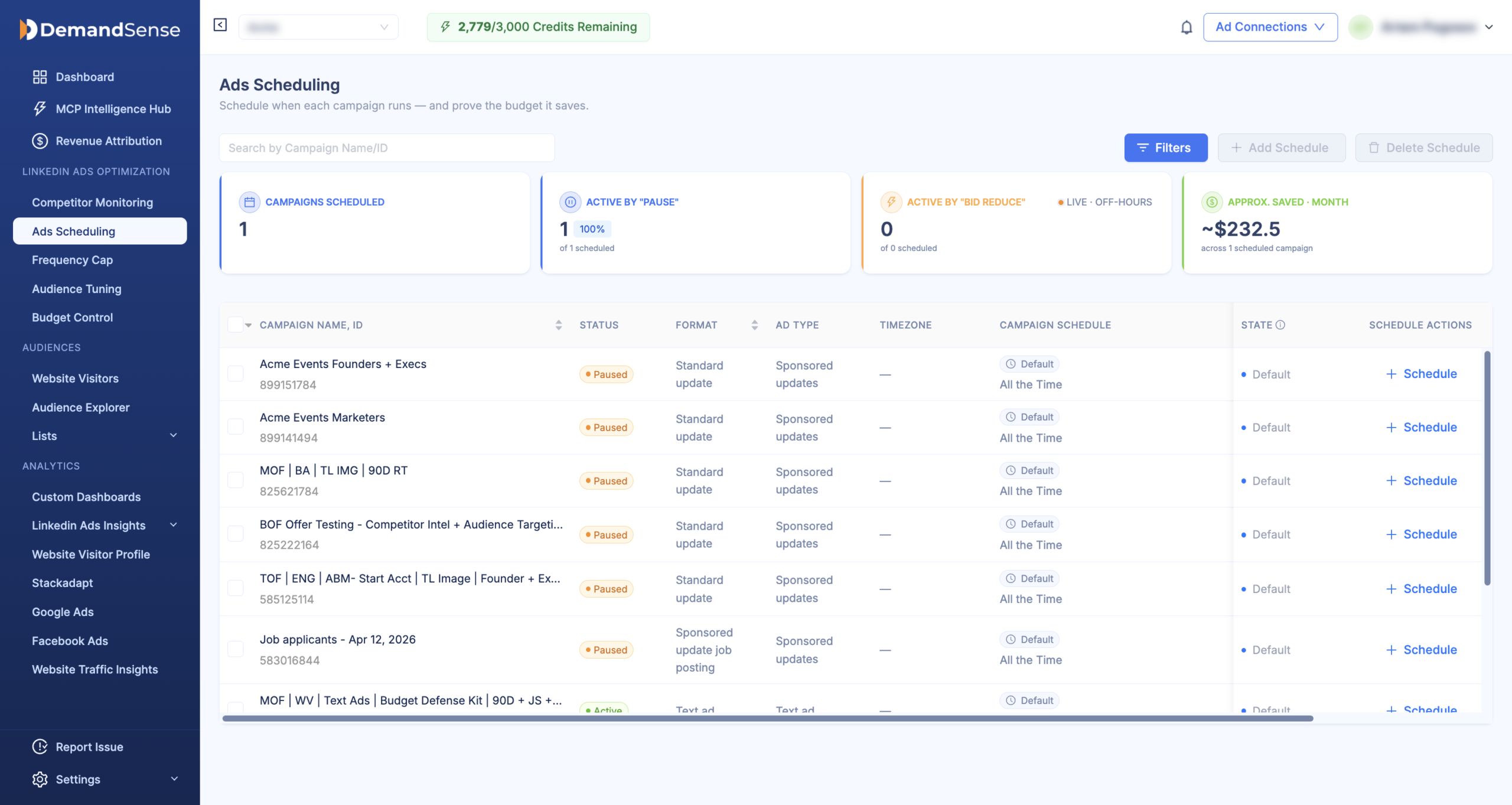
Factors identifies visiting companies by running each visit through several data providers in sequence and publishes its own match rate. Person-level identification is an add-on powered by RB2B, available from the Basic tier and limited to US visitors.
In DemandSense, visitor identification is part of every plan: companies from any country and, for US traffic, the person behind the visit with job title and work email. Each visitor is scored against your ICP, and the Opportunity Gap panel lists engaged accounts that are not in your CRM yet. How much of your own traffic resolves depends on who visits, which is what the trial is for.
Here Factors draws on sources outside your own channels. It takes buyer intent from G2, research topics from Bombora and engagement from LinkedIn, lets you upload third-party intent, and turns the lot into custom and predictive account scores with an Account 360 view. Alerts go to Slack or Microsoft Teams, and workflows push accounts into HubSpot, Salesforce, Apollo sequences or HeyReach.
DemandSense reads three sources of its own: engagement on LinkedIn, visits to your site and movement in your CRM. You write the thresholds for Awareness, Engagement and Intent, and the influenced pipeline, revenue and Won ROAS follow from them. Rising Accounts shows who is heating up this week, and it and Opportunity Gap can go out over a webhook.
Both tools connect to LinkedIn’s Conversions API, and Factors includes it on every tier, the free one too. Its integration sends website and CRM events to LinkedIn, with CRM updates going out every 24 hours.
DemandSense runs two streams. Closed-won deals go to LinkedIn as Purchase events with the deal amount attached, and qualified opportunities go as Qualified Lead events. Both streams sync daily with six identifiers for matching, and each one maps to a conversion rule you can point a campaign at. Purchase and Qualified Lead events are attributable for 365 days in LinkedIn, against 180 for most other types, so a deal that takes nine months still counts.
The practical difference is what sits next to it. In DemandSense the plan that sends deals back to LinkedIn is the same plan that schedules the campaign, caps frequency and takes closed accounts out of targeting. In Factors, impression control and bid scheduling arrive on Enterprise.
Factors launched its MCP server in April 2026 and added a hosted version in June. It is listed as an add-on from the Basic tier, works with Claude, ChatGPT, Cursor and similar clients, and returns accounts, journeys, attribution, engagement signals and saved reports for the model to reason over.
DemandSense MCP is read-only and open on every plan, the trial included. It reads LinkedIn ad exposure, identified website visits and CRM state, so when you analyse LinkedIn Ads with Claude you can ask for “ICP-fit companies that saw our ads, visited the site and are not in the CRM yet” in a single prompt.
Reviewers of Factors most often mention the learning curve and dashboards that take time to read, newer AI features that are still settling in, and a wish for more person-level identification and more flexible reporting. DemandSense users mention that the platform takes a while to learn in full, that the AI Co-Pilot is still early, and that people are identified for US traffic only. These are individual experiences, and both products ship changes every month, so check each point in a trial of your own.
Both rate well on G2: 4.5 for Factors.ai and 5.0 for DemandSense.
| DemandSense | Factors.ai | |
|---|---|---|
| Entry | Base, $89/mo, 200 credits: every feature, including revenue attribution, visitor identification, the four delivery settings, competitor monitoring, the Conversions API and MCP | Free: up to 5,000 monthly tracked users, 1,500 identified companies a month, 3 seats, 1 month of data retention |
| Paid plans | Plus, from $149/mo: the same features with 500 credits, climbing to 10,000 | Basic, Growth and Enterprise: prices not published, quoted on a call |
| Billing | Monthly | Typically annual contracts; quarterly on request for early-stage startups |
| LinkedIn controls and audience sync | Every plan | Impression control, bulk exclusion and bid scheduling on Enterprise; audience sync from Growth |
| Conversions API | Every plan | Every tier |
| MCP | Every plan | Add-on from Basic |
| Person-level identification | Every plan, US traffic | RB2B add-on from Basic, US traffic |
| Free trial | 30 days, every feature, no card | Free tier; 14-day trial on its plans |
| G2 | 5.0 | 4.5 |
DemandSense prices on monthly credits, so size the Plus tier against your real traffic. Factors prices on tracked users and identified companies per tier, and the number comes from its sales team. Both models grow with volume. What differs is when you learn the number and how long you commit for.
DemandSense measures what the LinkedIn spend produced, changes the campaign because of it, and hands the result back to LinkedIn so the next month’s delivery starts from what closed.
Choose Factors.ai if the programme is account-based across several channels and a sales team works from the output. Third-party intent, predictive scores, Slack alerts and workflows into outreach tools are what it built, and its tiers and contracts are set up for a team that buys that way.
Choose DemandSense if LinkedIn is where the budget goes and you are the one running it. The influence measurement, the delivery settings, visitor identification down to the person for US traffic, and the Conversions API are all in the first plan at $89 a month, so the read on a campaign and the change to it happen in the same place, and LinkedIn learns from the deals that closed.
If neither fits, the round-up of Factors.ai alternatives covers more options.
Start a 30-day trial and point it at the campaigns you are running this month.
For LinkedIn advertisers, yes. Both show company-level LinkedIn engagement next to site visits and CRM deals, identify website visitors, send conversions back through the Conversions API and offer MCP. Factors adds third-party intent, predictive scoring and Google Ads activation. DemandSense adds its delivery settings, spend protection and competitor monitoring on every plan from $89 a month.
Factors publishes four tiers, Free, Basic, Growth and Enterprise, without prices for the paid ones. The free tier covers up to 5,000 monthly tracked users and 1,500 identified companies a month, with three seats and one month of data retention. Paid tiers are quoted on a call, and its pricing page says they are typically billed on annual contracts. DemandSense publishes its prices: Base at $89 a month and Plus from $149, with every feature on both.
On Factors’ plan comparison in October 2026, LinkedIn impression control, bulk exclusion and bid scheduling are included on Enterprise. LinkedIn audience sync starts at Growth, and the LinkedIn Conversions API and view-through attribution are on every tier. DemandSense includes scheduling, a frequency cap, audience tuning and a budget ceiling on every plan.
Company identification is built in. Person-level identification is an add-on powered by RB2B, available from the Basic tier and limited to US visitors. DemandSense includes person-level identification for US traffic on every plan.
Yes. Factors MCP is an add-on from its Basic tier. DemandSense MCP is read-only, open on every plan and included in the trial, and reads LinkedIn ad exposure, identified website visits and CRM state.
Book a personalized demo and discover how we can transform your B2B marketing.
See a quick demo videoLinkedIn Ads
Tools & Comparisons
Compare LinkedIn automation tools for B2B marketing and ads: what each automates, how it connects to LinkedIn, which CRMs it supports, and what it costs.
LinkedIn Ads
Revenue Attribution & Measurement
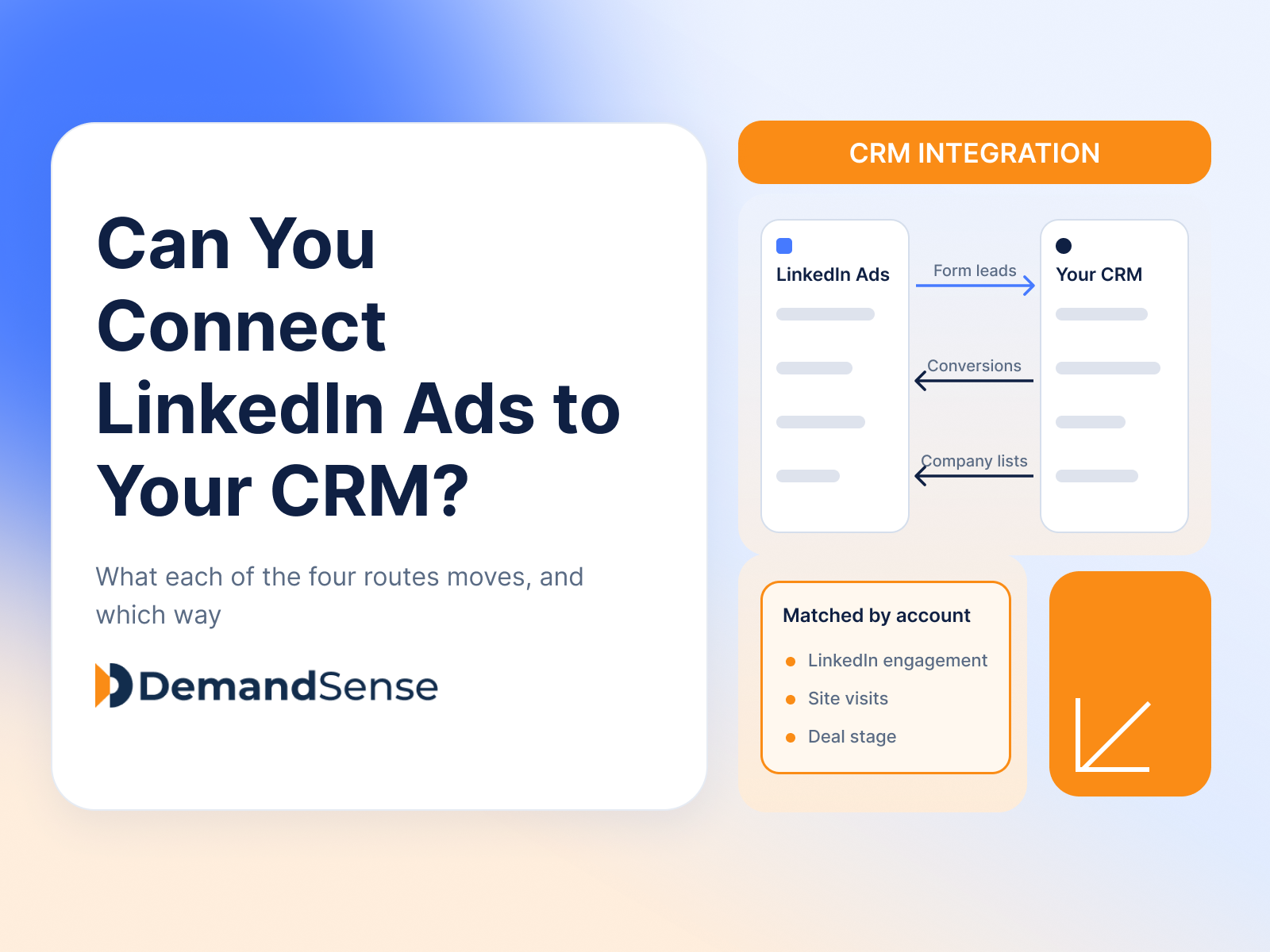
Yes, in four ways. See what CRM Sync, Lead Gen Form integrations, the Conversions API and connectors each move between LinkedIn Ads and your CRM.
Tools & Comparisons
Visitor Intelligence
DemandSense vs Vector after Vector’s September 2026 relaunch: account stages, ad audiences, deal stories, the Conversions API, MCP and pricing.
Get expert insights and strategies delivered to your inbox weekly.
