••
Insights & Resources
Expert strategies, case studies, and best practices for B2B marketing teams.
Expert strategies, case studies, and best practices for B2B marketing teams.
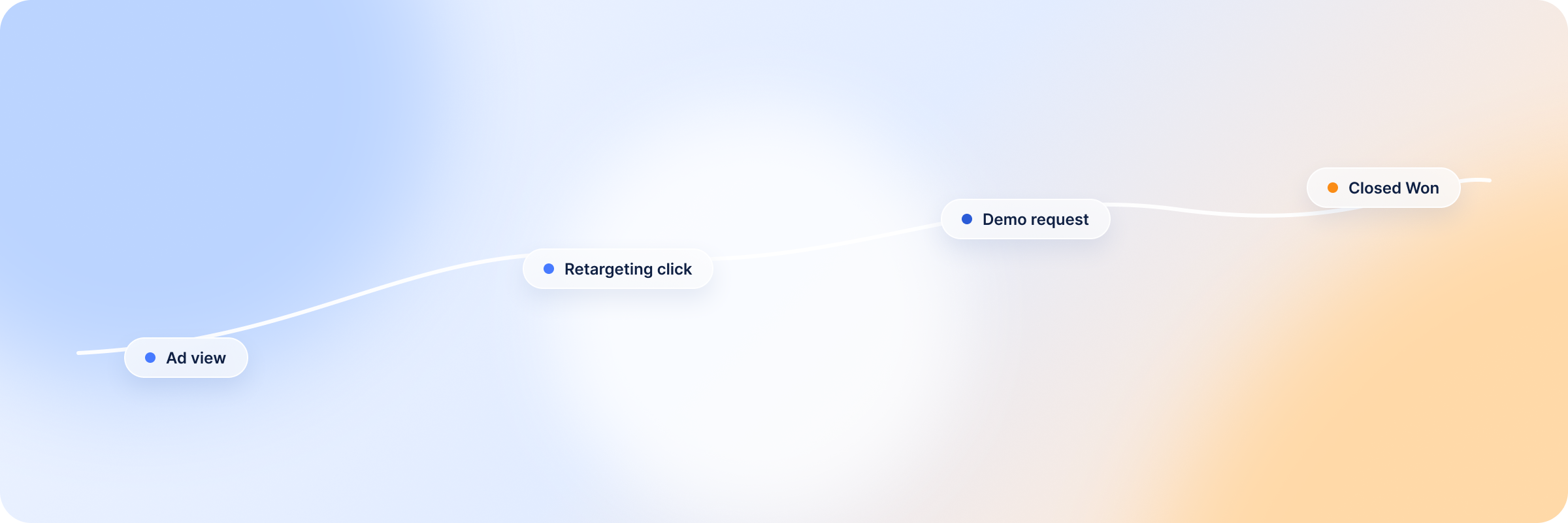
Yes, and there are four ways to do it. Each one moves different data in a different direction, and B2B teams usually need more than one before the numbers in Campaign Manager and the numbers in the CRM start describing the same campaigns.
Most of the confusion about LinkedIn CRM integration comes from treating these as alternatives, when each one covers ground the others leave open.
A LinkedIn Ads CRM integration moves data in three directions:
There’s also a question of grain. The routes that move data between the two systems mostly move records: one lead, one contact, one conversion event. B2B deals are bought by accounts, though, and most of a buying committee never fills in a form.
LinkedIn does report at the company level as well. Companies Hub in Campaign Manager shows engagement by company, organic included, and once CRM Sync is connected it adds revenue won. That view is built from LinkedIn’s own touchpoints and the three CRMs CRM Sync supports. Your website visits, and the CRM history between first touch and close, are read somewhere else.
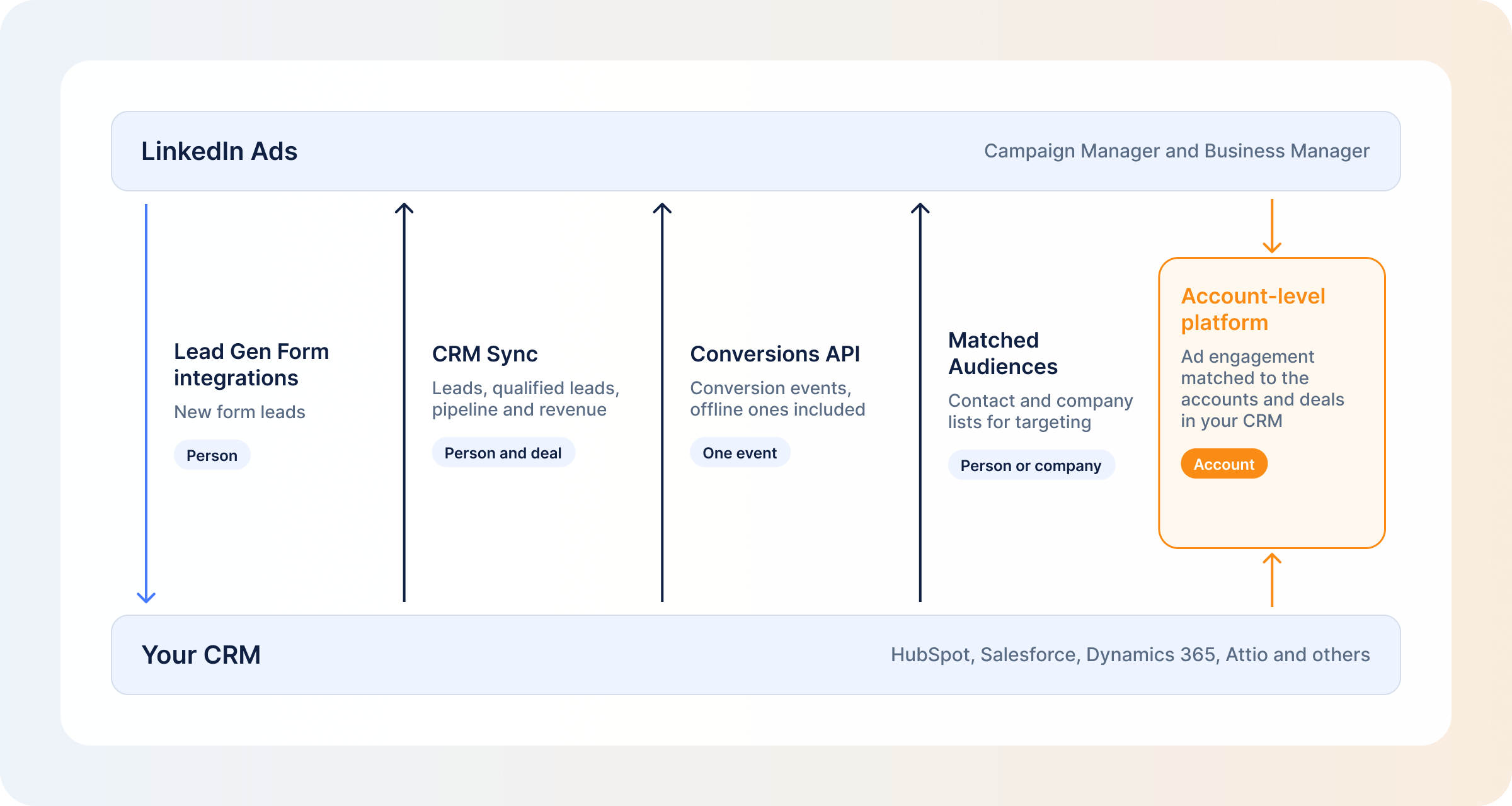
| Data | Direction | Grain | Route |
|---|---|---|---|
| Lead Gen Form leads | Into the CRM | Person | Lead Gen Form integrations |
| Leads, qualified leads, pipeline and revenue | Into LinkedIn | Person and deal; reported by company in Companies Hub | CRM Sync |
| Online and offline conversions | Into LinkedIn | Person, one event at a time | Conversions API |
| Contact or company lists | Into LinkedIn, for targeting | Person or company | Matched Audiences |
| Ad engagement matched to accounts and deals | Matched across both | Account | Account-level platforms |
The four routes below are layers. Most B2B sales and marketing teams run two or three of them, because each answers a different question.
Lead Gen Form leads reach a CRM or marketing automation platform in one of three ways: a native integration through a LinkedIn Marketing Partner, a connector such as Zapier or LeadsBridge, or a CSV download from Campaign Manager. If you rely on the download, note that LinkedIn only stores member profile data from leads for one year, so old leads can’t be pulled later.
Two practical snags come up often. Some partners don’t carry hidden fields or profile-link fields, and any edit to the form has to be mirrored on the CRM side before test leads sync cleanly. The bigger limit: this route only sees people who submitted a form. That works for LinkedIn Ads lead generation and says nothing about the rest of the account.
CRM Sync is set up in Business Manager, not Campaign Manager, and only works on ad accounts your business owns, not ones shared with you. It connects natively to three CRMs: Salesforce, Microsoft Dynamics 365 and HubSpot. You can also request access to a CRM already connected to Sales Navigator.
Once connected, CRM Sync gives you the Revenue Attribution Report in Business Manager, pipeline and revenue metrics in Campaign Manager, and auto-created conversions based on Leads, Qualified Leads or Contacts, which you approve per ad set. (LinkedIn renamed its levels: campaign groups are now campaigns, and campaigns are now ad sets.)
The limits are about scope. If your CRM isn’t one of those three, CRM Sync isn’t available, and the revenue reporting follows LinkedIn’s own attribution rules. How those auto-created conversions behave is covered in LinkedIn Ads conversion tracking.
The Conversions API is a server-to-server route for events the browser never sees, like a qualified opportunity or a closed deal that happens weeks after the click. You connect it through a partner (LinkedIn lists HubSpot, Zapier, Google Tag Manager, Adobe, Tealium and Dreamdata, among others) or build it directly with an access token generated in Campaign Manager.
If the Insight Tag and the Conversions API both report the same conversion with the same event ID, LinkedIn counts it once, so the two can run together. For a CRM, this is the route that turns a stage change into something LinkedIn can optimize toward. Sending closed-won deals this way is its own setup job, covered in detail for the LinkedIn Conversions API.
This category covers two different kinds of tool. Connectors such as Zapier and LeadsBridge move leads, lists and events between LinkedIn and a CRM without a developer, record by record.
Account-level platforms match LinkedIn ad engagement to the accounts and deals already in your CRM and then do something with that match. DemandSense is one of them. It’s built for marketers who run LinkedIn Ads in small B2B teams, and it puts attribution, optimization and website visitor profiling in one place.
By connecting natively to HubSpot, Salesforce and Attio, DemandSense reads paid and organic LinkedIn engagement per account alongside site visits and the deals in your CRM. The table further down shows how it compares with the other platforms in this space.
| CRM | LinkedIn Connection Options | Typical Use Case |
|---|---|---|
| HubSpot | CRM Sync; HubSpot’s LinkedIn Ads app syncs Lead Gen Form leads, builds audiences from HubSpot segments and sends lifecycle-stage changes through the Conversions API for contacts who clicked a LinkedIn ad; Sales Navigator sync | Teams that want marketing automation, CRM and the LinkedIn connection in one system |
| Salesforce (Sales Cloud) | CRM Sync; native LinkedIn Lead Gen Ads-to-lead conversion with field mapping (leads submitted before connecting don’t sync); Marketing Cloud Advertising for audiences; Conversions API through a partner or a custom build; Sales Navigator sync | Teams whose pipeline and revenue reporting already lives in Salesforce |
| Microsoft Dynamics 365 | CRM Sync; Sales Navigator sync; Lead Gen Form sync and the Conversions API through a partner, since Microsoft removed its native LinkedIn Lead Gen integration | Teams on Dynamics who mainly want CRM Sync’s revenue reporting |
| Zoho CRM | Not supported by CRM Sync; Zoho LeadChain syncs Lead Gen Form leads into Leads or Contacts and can send Zoho CRM data to the Conversions API | Smaller teams that need lead sync and basic conversion reporting |
Any other CRM can still connect through the Conversions API via a partner, a connector like Zapier, or a CSV export and import. If you run Attio, there’s a separate walkthrough on connecting LinkedIn Ads to Attio.
These platforms differ mostly in whether they work with leads or accounts, and whether anything goes back to LinkedIn.
| Platform | CRM & Data Connections | LinkedIn Ads Capabilities | Best For |
|---|---|---|---|
| DemandSense | HubSpot, Salesforce and Attio natively; webhooks for everything else | Paid and organic LinkedIn engagement per account, read alongside site visits and CRM deals; closed-won deals and qualified opportunities sent back to Campaign Manager through the Conversions API | B2B teams on LinkedIn Ads who want to see which accounts each campaign reaches and which deals it influenced, and send those deals back to LinkedIn |
| Factors.ai | HubSpot, Salesforce, Zoho, LeadSquared | Account identification; LinkedIn AdPilot syncs intent-based audiences, caps impressions per account, measures view-through attribution and sends conversions back to LinkedIn | Teams that want an ABM platform built around intent data |
| HockeyStack | HubSpot, Salesforce, Dynamics | Pulls LinkedIn impression and engagement data by company daily; sends pipeline conversion events to LinkedIn | Revenue teams building funnel reporting across many channels |
| ZenABM | HubSpot, Salesforce, Attio, webhooks, API | Account-level LinkedIn ad engagement, with ABM stages written to the CRM company record in a once-daily sync | ABM teams that want engagement stages written into CRM records |
| LeadsBridge | CRMs and marketing automation platforms through its connector catalogue | Syncs Lead Gen Form and event registration leads, Matched Audiences and Conversions API events | Teams that mainly need lead and audience syncing across many tools |
| Zapier | Any CRM with a Zapier app | LinkedIn Ads app (premium): new Lead Gen Form response triggers for sponsored and organic forms; actions to add contacts or companies to an audience, create an audience, remove an email or create a report | Teams that want to build their own lead-sync automations without a developer |
The questions worth asking of any tool here:
Most teams end up with one route for leads, usually a Lead Gen Form integration, and a separate one for accounts, because none of the tools above handles both equally well.
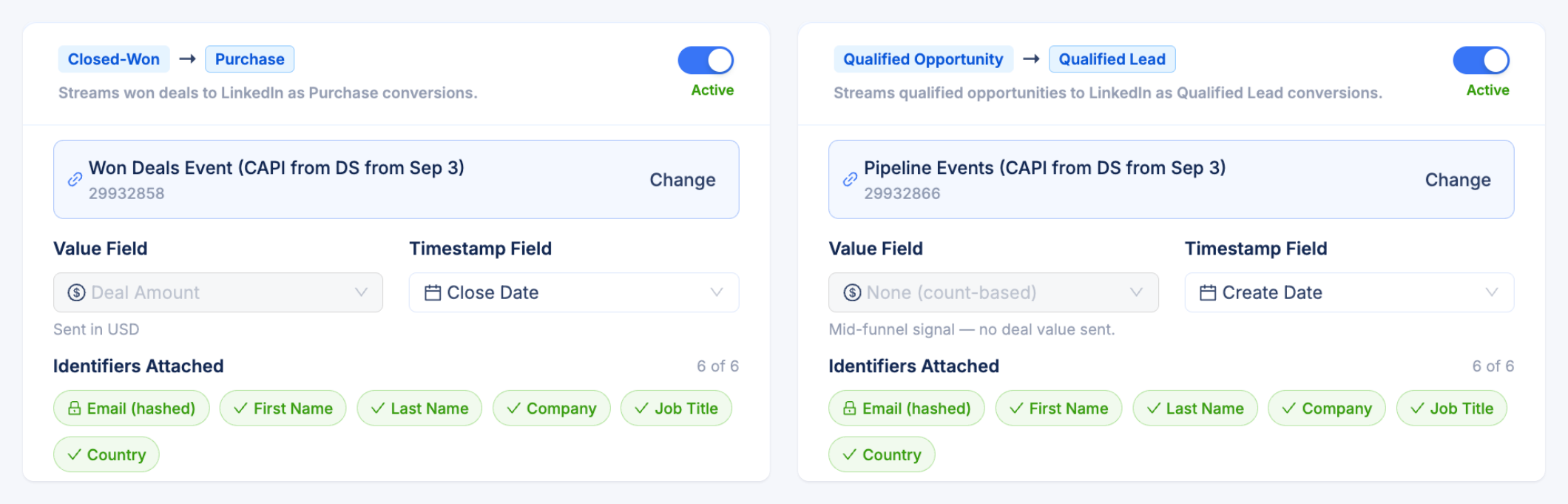
DemandSense covers the account side of that list. DemandSense matches paid and organic LinkedIn engagement to the account, shows it alongside site visits and the deal in HubSpot, Salesforce or Attio, and lets you decide what “influenced” means: three presets (Awareness, Engagement, Intent) or thresholds you set yourself, over a 3, 6 or 12-month lookback. DemandSense then sends the outcome back once a day through LinkedIn’s Conversions API, with closed-won deals arriving as Purchase conversions carrying the deal amount and qualified opportunities arriving as Qualified Lead conversions. DemandSense also pushes accounts with open deals into LinkedIn audiences and stops serving acquisition ads to accounts that have already closed.
You can try it on your own LinkedIn account and CRM free for 30 days, with no card required, at demandsense.com.
Click-paths differ by CRM, so this is the order of decisions for any route.
The failure that’s easiest to miss comes later. An integration works for a few weeks, then someone renames a form field or a CRM property, and leads or conversions stop arriving without any error. A short weekly check of conversion counts in Campaign Manager against the CRM catches it, and the right rule settings for LinkedIn conversion tracking make the drop easier to spot. If you follow HubSpot’s documentation while you set this up, it still uses LinkedIn’s old names for campaigns and ad sets.
With LinkedIn’s native routes connected, you can report on:
When LinkedIn engagement is read alongside site visits and the full CRM history, you can also see:
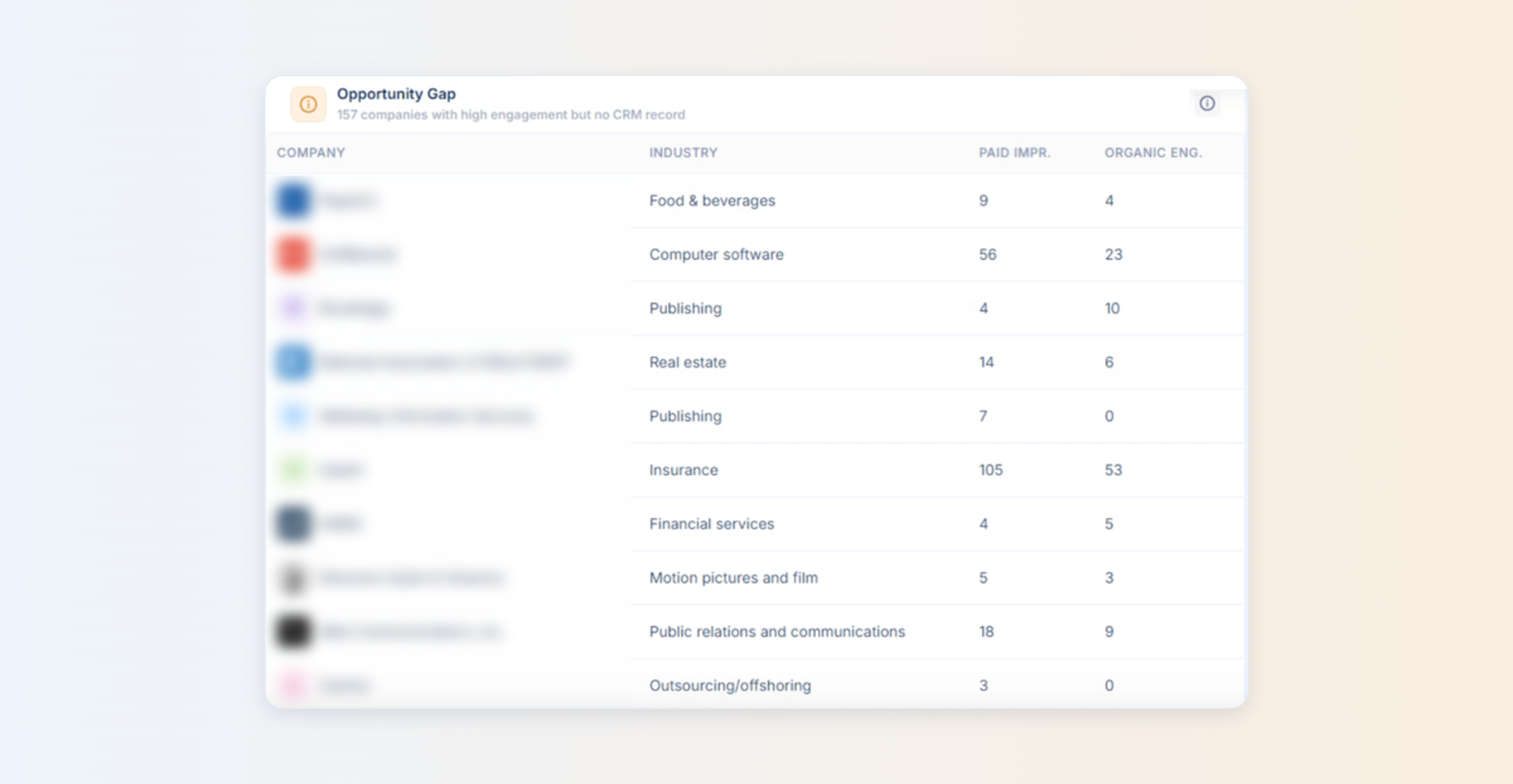
The second list is usually where budget decisions change, because it counts the buying committee and not just the one person who converted. In DemandSense, the last item has its own panel, Opportunity Gap, listing companies with strong paid and organic engagement and no CRM record. How influence gets counted in the first place is its own topic, covered under LinkedIn pipeline attribution.
No. Sales Navigator sync, on Advanced Plus with Salesforce, Dynamics 365 or HubSpot, moves saved leads, accounts and rep activity for the sales team. Ads integrations move leads, conversions and revenue for marketing. They meet in one place: a CRM already connected to Sales Navigator can be requested for use in Business Manager.
Yes. CRM Sync can be disconnected at any time in Business Manager’s CRM Sync settings, and LinkedIn purges the CRM data within 30 days of disconnection. If you’re switching CRMs, review the conversions created from the old connection, since LinkedIn doesn’t document what happens to them.
It depends on the route. CRM Sync takes up to 72 hours for the first load into the Revenue Attribution Report and another 24 to 48 hours to reach Campaign Manager. LinkedIn doesn’t publish the ongoing refresh rate. Lead Gen Form sync depends on the partner, and HubSpot says new leads can take up to about two hours. DemandSense sends CRM outcomes to the Conversions API once a day.
According to LinkedIn’s CRM Sync documentation, identifiers such as email and name are pseudonymized with access controls, pipeline signals like revenue get differential privacy and encryption, individual-level CRM data isn’t shared with other advertisers, and data is purged within 30 days of disconnection. The advertiser is still responsible for having permission to share customer data in the first place.
Yes, and for B2B it’s often the more useful connection. CRM Sync, the Conversions API and account-level platforms all work without anyone filling in a form. The average LinkedIn CTR is 0.52% (0.875% across DemandSense clients), according to the 2025 DemandSense B2B Benchmark Report, so almost everyone your ads reach never clicks. A forms-only integration sees a small slice of that effect, which is why LinkedIn view-through attribution matters.
Book a personalized demo and discover how we can transform your B2B marketing.
See a quick demo video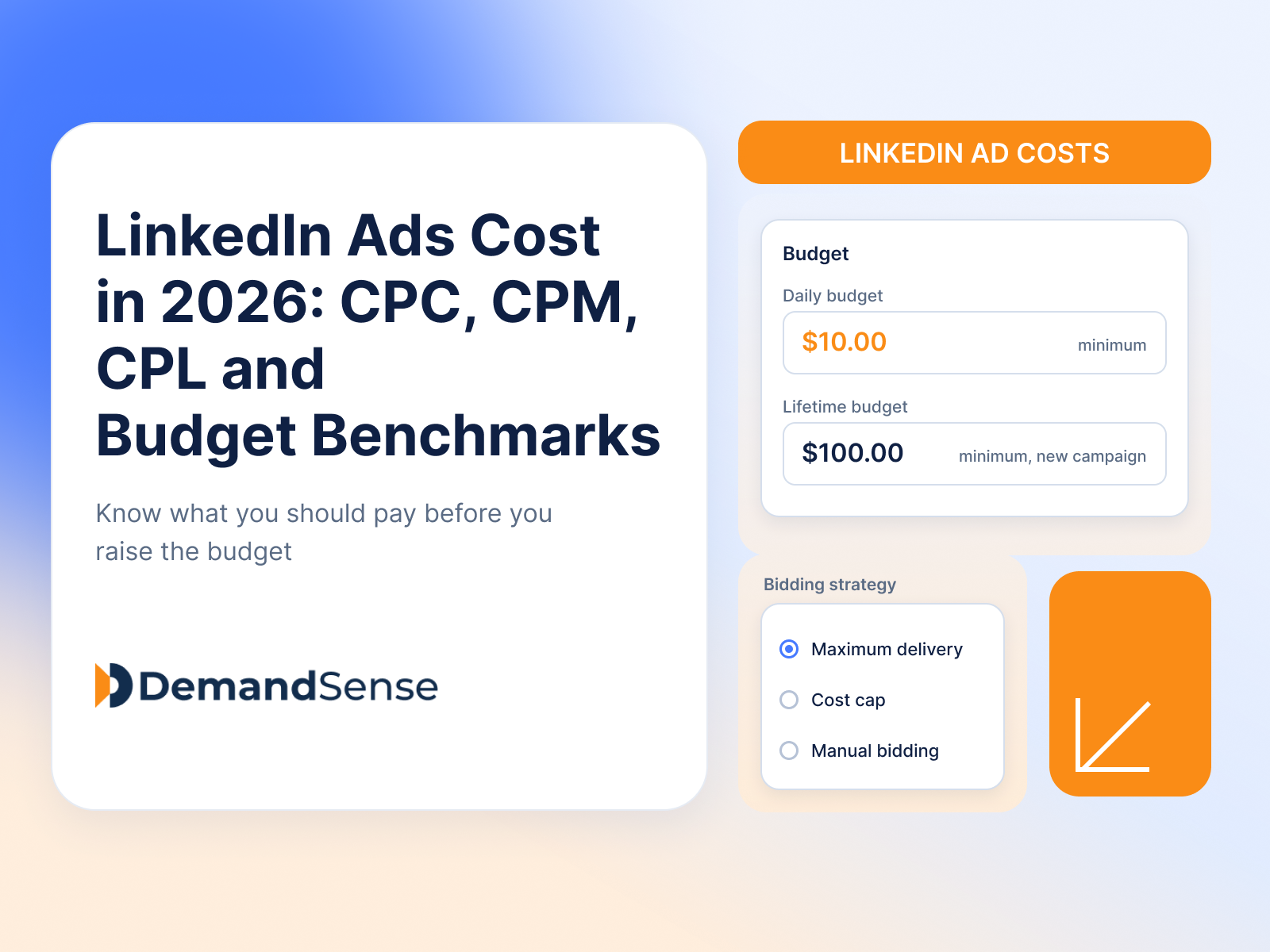
LinkedIn Ads
See how much LinkedIn ads cost in 2026: CPC, CPM, CPL and minimum budgets. Real B2B benchmarks and ways to lower your LinkedIn advertising costs.
LinkedIn Ads
Tools & Comparisons
DemandSense vs Linklo on scheduling, exposure control, A/B testing, visitor identification and price — two tools that overlap on delivery and split after it.
LinkedIn Ads
Tools & Comparisons
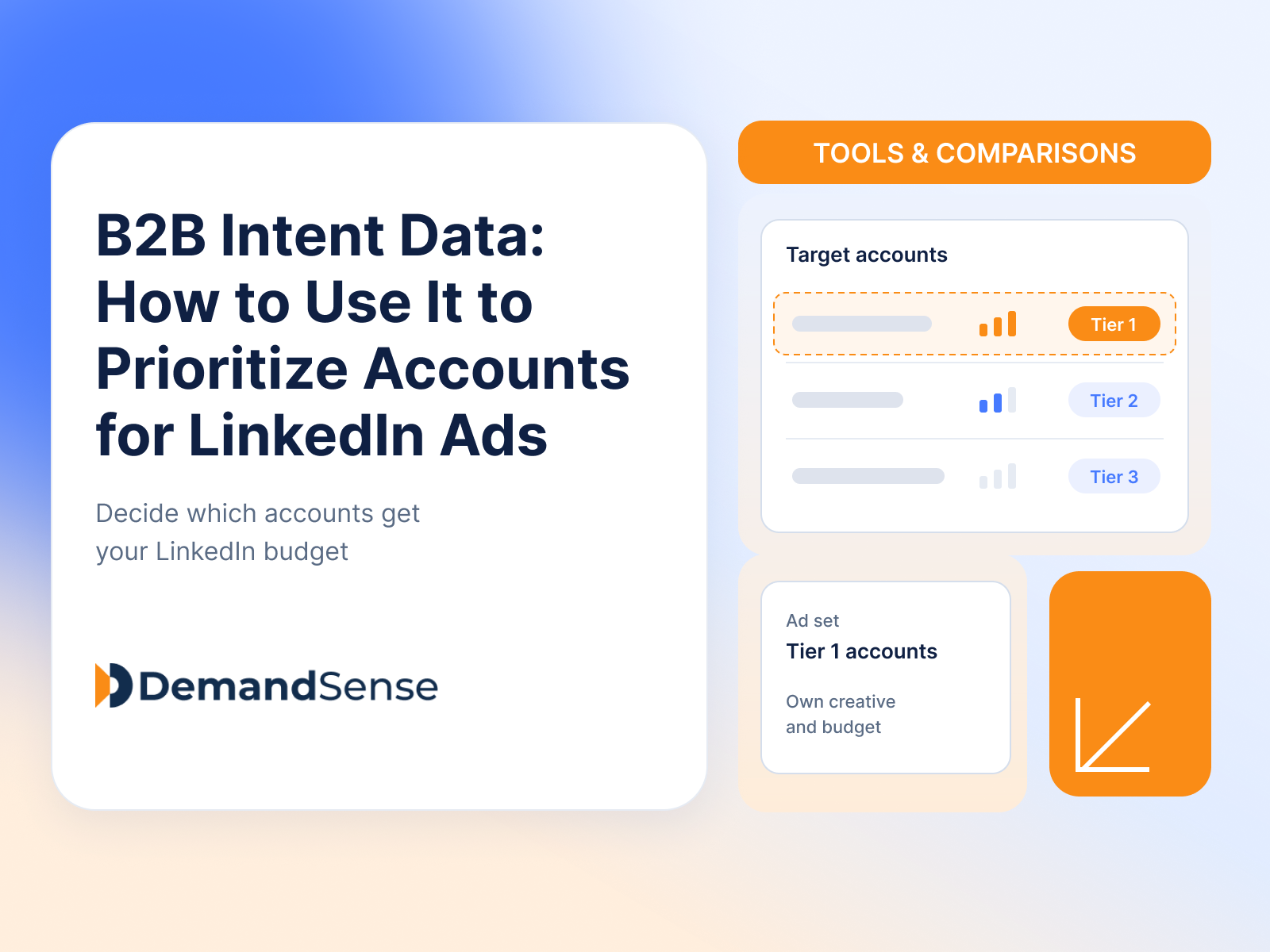
What B2B intent data is, how the main providers differ, and how to use intent signals to decide which accounts get your LinkedIn Ads budget.
Get expert insights and strategies delivered to your inbox weekly.
