••
Insights & Resources
Expert strategies, case studies, and best practices for B2B marketing teams.
Expert strategies, case studies, and best practices for B2B marketing teams.

B2B intent data is behavioral information that shows a company is actively researching a problem, product or category. It comes from signals like content consumption, keyword searches and site visits, rather than from a form fill or a conversation.
Most intent data is account-level by default: the signal points to a company, not to an individual buyer. And it’s a signal of research. A company showing intent could be six months from buying, or simply benchmarking options for a report. Reading the signals over time rather than reacting to a single spike is what buyer intent tracking is for.
Most teams end up combining the three types of B2B intent data, since each one answers a different question about an account.
First-party intent data comes from your own properties: site visits, pricing and demo page views, content downloads and email activity. Engagement with your own LinkedIn ads and Company Page belongs here too, since it’s a direct response to your brand. The catch is scope. It only sees accounts that have already found you, so it says nothing about companies still researching the category elsewhere.
Second-party intent data is another company’s first-party data, shared directly with you. The usual example is review sites like G2 and TrustRadius, which show which accounts compared your category, sometimes alongside specific competitors. Coverage is the limit here: it only captures research done on that partner’s site.
Third-party intent data is research activity collected across publisher networks, content co-ops and bidstream, then resolved back to a company. Bombora’s co-op is the best-known example. The data is topic-level and account-level, so a surge tells you a company is reading about a subject. It doesn’t tell you anyone there has heard of you.
An intent signal is a single observable action, such as a page visit or a content download. Intent is the pattern you see once several signals from the same account line up.
Not every signal deserves the same attention. From strongest to weakest:
One signal from one person could mean almost anything. When several people at the same company generate the same kind of activity within a short period, you have a pattern worth acting on. Reading the account as a whole instead of chasing individual clicks is the idea behind account-based intelligence.
Intent data decides which accounts get attention, how sales opens the conversation, what marketing says, and finally how ad budget is spent to reach them.
Intent data re-sorts the list you already have, and ICP fit still decides who’s on it. Tiers work better than a single list:
Budget, rep time and ad creative follow the tier. Tier 3 stays on the list, since fit hasn’t changed, but it waits its turn. This tiering is the backbone of a working B2B ABM strategy on LinkedIn.
Reps get more out of their time when they start with accounts already showing intent, instead of working a list in the order it was handed to them. And an opener about the topic an account has been researching reads very differently from a cold template.
LinkedIn has its own seller-side version, Sales Navigator Buyer Intent. It’s an account score built from 180+ signals, including LinkedIn activity, ad engagement and InMail responses, and it’s only on the Advanced and Advanced Plus plans. It helps sellers decide who to contact; it doesn’t build an ads audience.
The topic an account has been researching should decide what it sees next. An account early in the process needs content that names the problem. One comparing options needs comparison content. One further along needs proof: case studies, benchmarks, results.
Keep in mind that intent data is usually account-level, so a campaign built around a research signal still has to reach the several roles involved in the decision, not one contact. That’s the work of ABM prospecting on LinkedIn.
Here’s how it plays out as a campaign setup on LinkedIn:
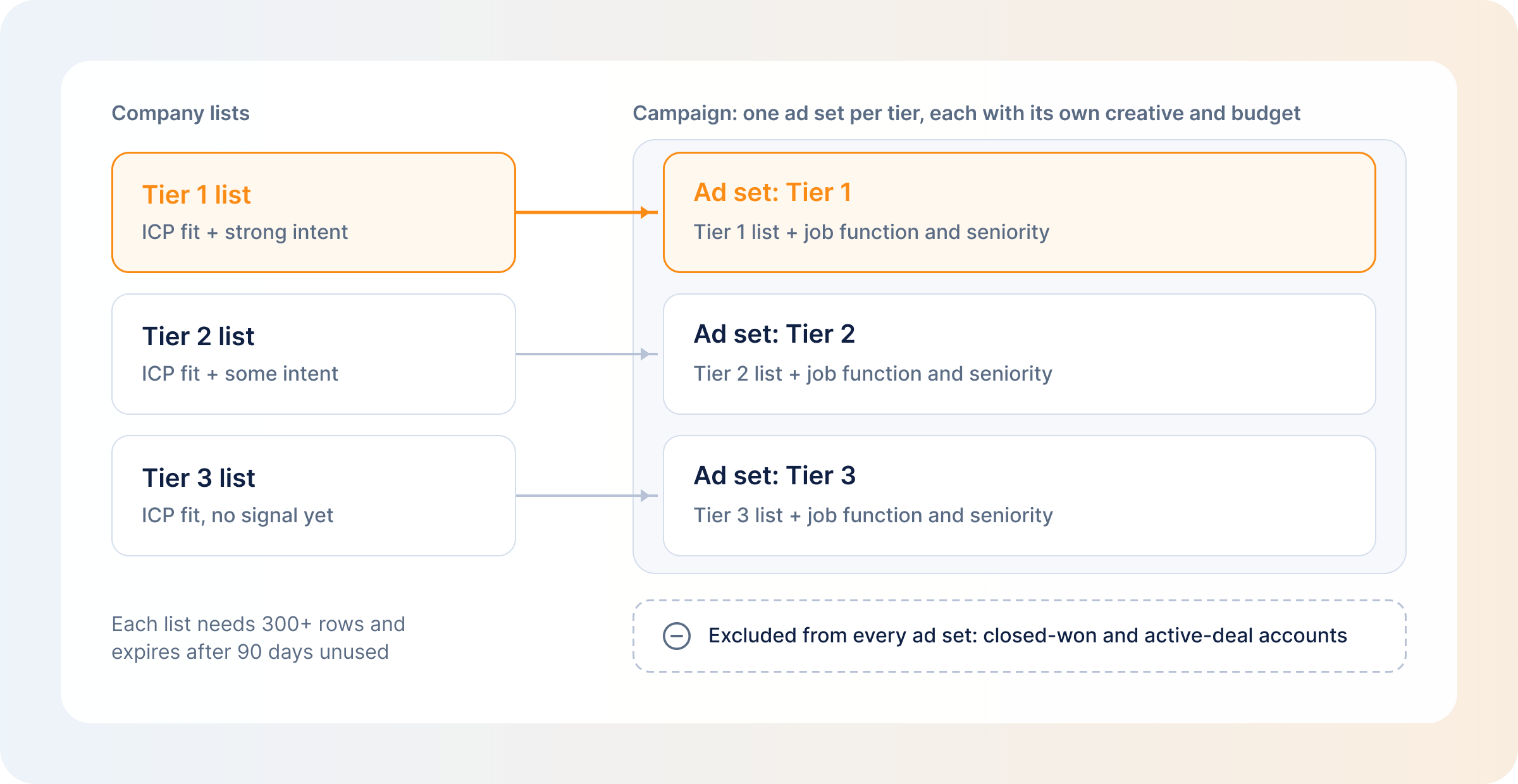
From there, let the tiers move with how accounts respond to the ads rather than staying where they started. LinkedIn Custom Audiences and LinkedIn retargeting are the two tools that keep that loop running.
What intent data can tell you:
What intent data cannot tell you:
The last one matters most on LinkedIn. Only your own data shows whether an account responds to your campaigns, and no provider can tell you that in advance.
AI is good at spotting patterns across many weak signals that a person scanning a dashboard would miss. It also summarizes an account’s activity into something readable and ranks long account lists. That’s why 6sense (with 6AI) and Demandbase both build AI into how their platforms surface and rank accounts.
The limit is that AI ranks whatever it’s given. Feed it noisy signals, or signals from one thin source, and it will still produce a confident, ranked answer.
The other use is answering a direct question. The DemandSense MCP server lets Claude or ChatGPT query LinkedIn ad engagement, identified site visitors and CRM state side by side, so you can ask “Which ICP-fit companies saw our ads, visited the site, and aren’t in our CRM yet?” instead of assembling that answer across three tools by hand. The DemandSense MCP server is read-only and open to everyone on the trial. The DemandSense MCP Intelligence Hub covers setup, and there’s also a walkthrough of how to analyze LinkedIn Ads with Claude.
The best intent data providers differ first by where their intent comes from, and that decides what each one can see and where its blind spots sit. Here’s how the intent data providers in 2026 compare:
| Provider | Where the Intent Comes From | Level | LinkedIn Ads Route | Built For |
|---|---|---|---|---|
| DemandSense | Your own LinkedIn ad and organic engagement, site visits and CRM activity | Account; people on identified US site traffic | Pipeline accounts pushed to LinkedIn audiences automatically; closed deals excluded | B2B teams running LinkedIn Ads who want budget on the accounts responding to them |
| Bombora | A co-op of 5,000+ B2B sites; content consumption against a topic taxonomy | Account | Native sync as LinkedIn Matched Audiences, weekly | Teams wanting a topic-level view of category research |
| 6sense | Keyword tracking, third-party activity, partner data (Bombora, TechTarget, G2, TrustRadius) | Account, with buying-group modelling | Segments sync to Campaign Manager daily | Teams wanting a predicted buying stage alongside the signal |
| Demandbase | Bidstream from its own DSP, publisher content, your site engagement, plus Bombora, G2, TrustRadius | Account | Audiences sent to Campaign Manager nightly after a first sync | Teams running ABM advertising and orchestration together |
| ZoomInfo | Its own NLP content tracking, bidstream, IP identification, plus G2 and TrustRadius | Account and person | Audiences pushed to LinkedIn, Meta or Google | Sales-led prospecting teams |
| Cognism | Bombora-powered intent, plus hiring, funding and job-change signals | Company only | No native route; export and build the audience yourself | Sales teams prospecting with contact data |
DemandSense is a platform for the marketer who runs LinkedIn Ads in a small B2B team. It puts three things in one place that usually live in three separate tools: attribution, optimization, and website visitor profiling. On top of that sits an MCP server. For this list, that means DemandSense reads intent from how accounts respond to you: paid and organic LinkedIn engagement, site visits and CRM movement, side by side. DemandSense turns that into LinkedIn audiences through Pipeline Sync, and its Spend Protection stops spend once a deal closes. In DemandSense you set what counts as engaged, with the Awareness, Engagement and Intent presets or your own thresholds.
Bombora’s Company Surge is built from a co-op of 5,000+ B2B sites, tracking content consumption against a shared topic taxonomy and updating weekly. The output is account-level, and it syncs natively into LinkedIn Matched Audiences through LinkedIn’s Ads API. 6sense, Demandbase and Cognism all license Bombora’s data. Bombora is built for teams that want a view of who is researching their category across the web.
6sense combines keyword research tracking, third-party activity and partner data from Bombora, TechTarget, G2 and TrustRadius, with buying-group modelling on top. Each account is placed in a predicted buying stage, from Target and Awareness through Consideration and Decision to Purchase, and the stage moves as new signals come in. Segments sync to Campaign Manager daily as third-party Matched Audiences. It’s built for teams that want a predicted stage attached to the intent signal.
Demandbase draws intent from bidstream through its own B2B DSP, publisher content consumption and your own site engagement, supplemented by Bombora, G2 and TrustRadius. Scores are aggregated weekly at the account level. Audiences go to Campaign Manager in a first sync that takes 24 to 48 hours, then nightly. It’s built for teams that want intent data, advertising and ABM orchestration in one platform.
ZoomInfo tracks intent through its own NLP-based content analysis, bidstream data and IP identification, alongside G2 and TrustRadius signals. Unlike most providers here, it also offers person-level intent, next to its contact database. GTM Studio pushes audiences built from buying intent to LinkedIn, Meta or Google. It’s built for sales-led teams whose prospecting already runs through ZoomInfo’s contact data.
Cognism’s intent data is Bombora-powered and company-level, with up to 12 topics per account on the Pro plan, chosen from a library of 11,000+. It sits next to hiring, funding and job-change signals. There’s no native LinkedIn Ads route, so accounts showing intent are exported and built into a LinkedIn audience by hand. It’s built for sales teams prospecting off contact data, with intent as a supporting filter.
Choosing an intent data provider is easier if you hold every option up against the same six questions:
Third-party intent data helps decide who to target, and first-party engagement decides who to prioritize once the campaign is live, so many teams run one of each. If the job is finding accounts researching your category before they’ve heard of you, that’s what co-op data is built for.
On overlap, thresholds and the LinkedIn route, DemandSense works from data your own accounts already generate: LinkedIn engagement, site visits and CRM activity, read side by side. In DemandSense you decide what counts as engaged, and Pipeline Sync and Spend Protection carry that decision into your LinkedIn audiences. The 30-day free trial needs no card: start it at demandsense.com.
Intent data fails in predictable ways, and each has a fix you can put in place before launch.
On privacy, check how each provider sources its data and handles consent. Regulations differ by region, so that’s a question for your legal team.
Third-party intent tells you which companies are researching a topic somewhere on the web. DemandSense is built around the other question: which of them are responding to your LinkedIn campaigns.
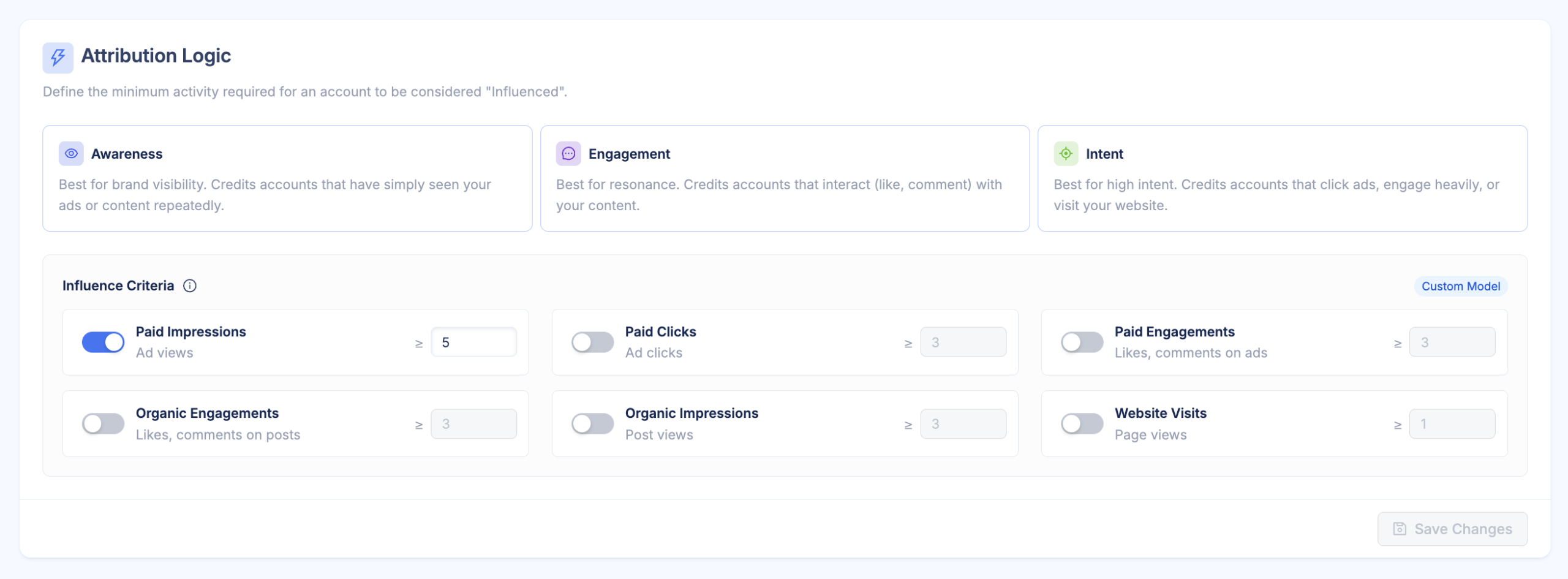
The same account-level view is what connects ad engagement to pipeline in LinkedIn revenue attribution. You can try it on your own accounts with the 30-day free trial, no card needed, at demandsense.com.
Three people from one company engage with your LinkedIn ads over two weeks, then someone from that company visits your pricing page. That pattern is a strong signal. The same pricing visit on its own, from one person, is much weaker.
The two terms are mostly used interchangeably. Strictly, intent data is the raw signal, such as a page visit or a topic surge, and buyer intent is the conclusion you draw from it: that an account may be in market.
It depends on the source and its coverage. Third-party intent is modelled from research activity and resolved to companies, so treat it as probable rather than proven. First-party engagement across your ads, site and CRM is observed directly.
No. Start with fit, then look at how strong the signals are and how many people they come from. Accounts that pass both go to reps. Accounts with a faint signal go to ads and nurture, where being early costs less.
Quickly, because research windows are short. Bombora updates weekly, and 6sense segments sync to LinkedIn daily. Refresh your LinkedIn company lists on the same rhythm, or a static upload keeps targeting accounts whose research has already ended.
Mostly companies. Bombora and Cognism work at company level; ZoomInfo offers person-level intent. On your own site, DemandSense identifies the companies visiting and the people on US traffic. Campaign Manager reports ad engagement by company, except for Lead Gen Form submissions.
Yes, through company lists (CSV or a provider’s sync), Companies Hub dynamic lists and retargeting. Our 2026 LinkedIn B2B Benchmark Report puts the average LinkedIn CTR at 0.52%, so most accounts in a tier won’t click. Judge tiers on engagement per account and connect impressions to pipeline.
Book a personalized demo and discover how we can transform your B2B marketing.
See a quick demo video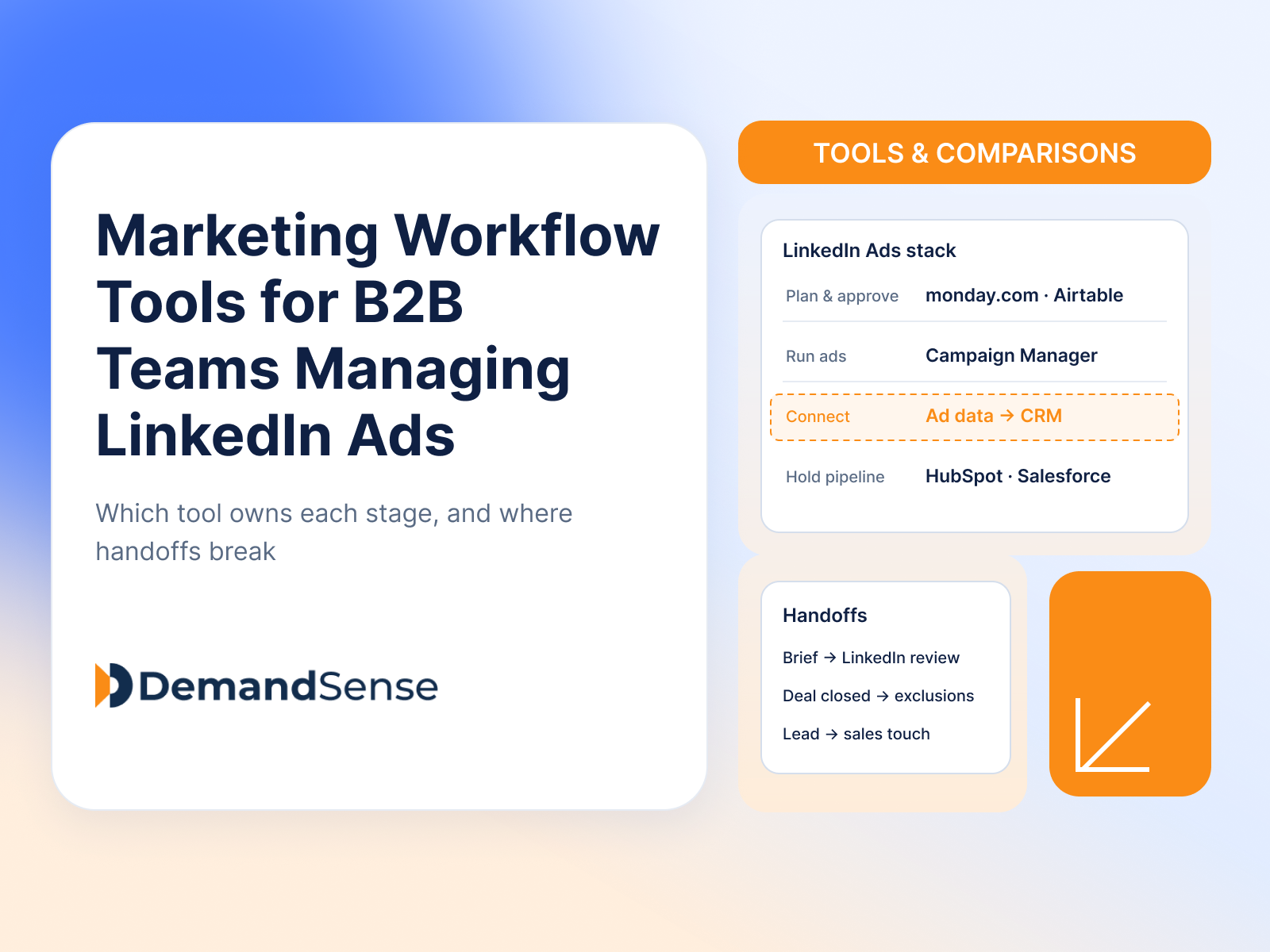
LinkedIn Ads
Tools & Comparisons
The marketing workflow tools B2B teams use to plan, launch, monitor and measure LinkedIn Ads, which stage each one owns, and where the handoffs break.
LinkedIn Ads
MCP & AI Hub
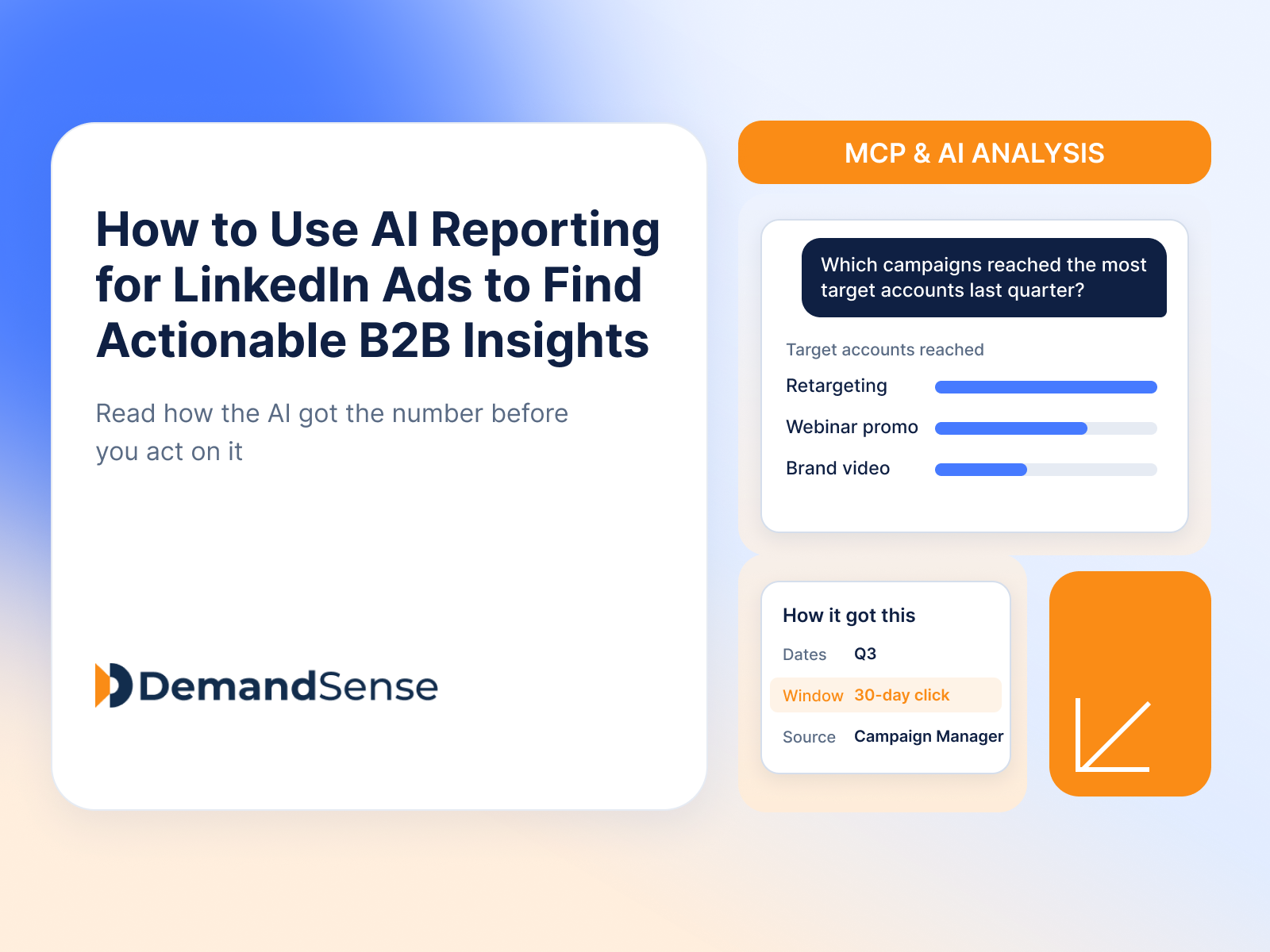
Learn how to use AI reporting for LinkedIn Ads: which data to connect, what to ask, how to validate the answer, and where generic AI tools fall short.
LinkedIn Ads
Revenue Attribution & Measurement
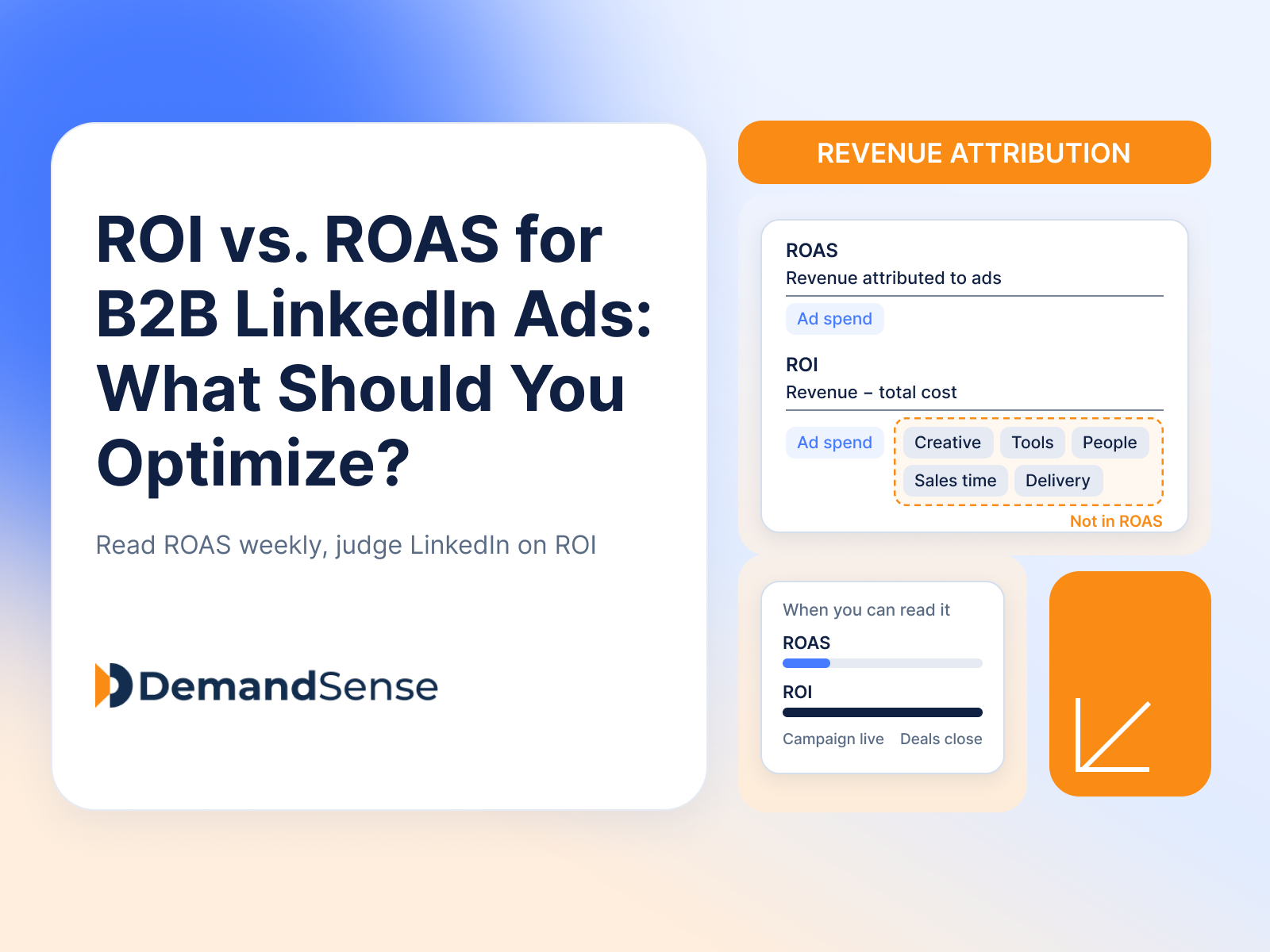
ROI vs. ROAS for B2B LinkedIn Ads: how each is calculated, why a high ROAS can still lose money, and which one to optimize when deals close months later.
Get expert insights and strategies delivered to your inbox weekly.
