Fibbler is a B2B attribution tool that connects LinkedIn ads data to your CRM. It gives marketers visibility into how ad engagement influences pipeline and revenue, making it a popular choice for teams running LinkedIn campaigns.
As one G2 reviewer said, “Fibbler lets us prove the impact of LinkedIn ads on our opportunities and pipeline, and offers a comprehensive timeline journey view from first ad engagement to the opening of an opportunity.”
Despite its strengths, many teams seek alternative attribution tools, especially those that need a more holistic platform that provides insights and management capabilities across all their B2B marketing channels.
In this article, we will cover seven best Fibbler alternatives and compare their strengths, limitations, and use cases to help you find the right platform for your business.
Why Teams Look for Fibbler Alternatives
Fibbler is an excellent platform for tracking company-level engagement for LinkedIn and Google ads. However, these are not the only things important to marketers; hence, they seek alternatives that can satisfy their other needs.
Here are some of the common reasons:
- Need for deeper LinkedIn ads analytics: Fibbler can identify the companies engaging with your ads and tie that information back to your CRM data. But it cannot offer in-depth analysis that marketers need to improve campaigns. Teams running ABM campaigns still need contact-level engagement data for them to see whether they are reaching the right people at target accounts or just wasting spend. They also need to see who is on their website, which Fibbler covers only at company level and only through a paid add-on.
- Need for campaign optimization: Fibbler is primarily an attribution platform. It helps teams prove LinkedIn ROI, but it does not help much with LinkedIn ads optimization. Many teams want tools that can help them make better budget decisions about their campaigns and give them more control over them. They want actionable insights into which LinkedIn campaigns generate the most pipeline and revenue, which audiences produce the highest ROI, and the campaigns that are wasting ad spend.
- Need for a tool built specifically for LinkedIn-first ABM: Teams that run account-based marketing campaigns on LinkedIn want platforms with capabilities like account engagement tracking, buying committee visibility, and pipeline progression tracking. Fibbler helps with traditional demand gen campaigns and was not built specifically for ABM campaigns. It can only track traditional campaign metrics like impressions, clicks, and leads.
- Need for multi-touch attribution: Fibbler is specifically built for LinkedIn and Google ads and cannot track customers across multiple channels. So teams that run complex multi-channel B2B campaigns opt for multi-touch platforms that can track the buyer from the first touchpoint to the last across all paid and organic channels.
- Need for more frequent data refresh or better CRM sync: With Fibbler, the dashboards are automatically updated at night, and the CRM updates only happen after every 7 days. But most teams need hourly reporting and updates to help with day-to-day campaign health management, like bid adjustments and client exclusions. This weekly delay also makes it hard for sales to identify and engage high-intent accounts while they are still looking. Hence, teams look for alternative platforms with fresher reporting and tighter CRM integrations.
Best Fibbler Alternatives Compared
| Tool |
Best For |
Pricing |
Rating |
Why Choose It Over Fibbler |
| DemandSense |
Marketers running LinkedIn Ads in a small B2B team who want attribution, optimization and website visitor profiling in one place. |
Base $89/month, Plus from $149 |
5.0/5 |
Sends closed deals back to LinkedIn through the Conversions API, identifies the companies and people on your website, and includes its MCP server on every plan. |
| ZenABM |
LinkedIn-first ABM teams that need multi-channel attribution. |
$69–599/month, or $59–479 billed annually |
5.0/5 |
Tracks all channels at no added cost: LinkedIn + Google + Reddit + Organic + AI chatbot. |
| Factors.ai |
B2B teams scaling GTM into enterprise accounts and in need of multi-touch attribution. |
Lite $199/month after a free trial; Basic from $6,000/year |
4.5/5 |
Tracks multiple touchpoints across the web, ads, CRM, product, and third-party platforms. |
| Dreamdata |
Enterprise B2B revenue analytics. |
Free plan + custom $750–999/month |
4.7/5 |
Offers deeper multi-touch attribution and maps the entire customer journey on an easy-to-read dashboard. |
| HockeyStack |
Enterprise teams running multi-channel campaigns. |
$2,200/month |
4.4/5 |
Tracks full-funnel GTM revenue attribution. |
| Demandbase One |
Enterprise ABM teams that want to integrate ABM directly into workflows. |
$24K–50K/year |
4.4/5 |
Provides account-level intelligence plus intent data. |
| Vector |
ABM teams running contact-level audiences across many ad networks. |
$3,000/month platform fee plus credits |
4.9/5 |
Pushes contact-level audiences to LinkedIn, Google, Meta and seven more ad networks, and scores accounts into buying stages. |
How to Choose the Right Fibbler Alternative
Out of all the platforms above, the “best” alternative entirely depends on your business and what you hope to achieve. But here are some basic features that are non-negotiable:
LinkedIn Ads Depth
Attribution platforms can track campaigns across channels, but most of them struggle when it comes to LinkedIn ads attribution. If LinkedIn is your main advertising platform, look for a tool that can help you answer questions like:
- Which campaigns influence pipeline the most?
- Which ads drive engagement from target accounts?
- Which accounts are engaging repeatedly over time?
- How do I see if the buying committee from target accounts is actively engaging?
A good attribution platform should go beyond identifying companies visiting your site and provide actionable engagement signals that marketers can act on while the campaign is still running.
Attribution Model
The B2B buyer journey involves multiple touchpoints. First-touch and last-touch models only focus on a single touchpoint and ignore the rest. If you want to see the entire buyer journey, you should choose a multi-touch attribution platform.
CRM and Data Sync
Many attribution platforms easily integrate with HubSpot and Salesforce, but not with other CRM platforms. Always pick a platform that matches your tech stack.
Additionally, look at the platform’s:
- Sync frequency (some systems lag, creating a gap between signals and sales action)
- Opportunity and revenue mapping
- Contact-to-account matching
- Availability of historical data
A platform that refreshes data regularly and keeps marketing and CRM data aligned produces reports that marketing and sales teams can use to grow pipeline.
Optimization Capabilities
Many attribution tools are good at explaining what happened, but very few can tell you how to improve campaign performance. Look for a platform that can identify buyer intent signals, ready-to-buy audiences, track campaign influence on pipeline, and still has tools to help you manage campaigns.
Use Case Fit
The best platform depends on your goals. For example:
- If you aim to identify website visitors, DemandSense, Factors.ai, and Vector are the best.
- If your only goal is to prove LinkedIn ROI, then Fibbler is enough.
- If you run campaigns across different channels, then a multi-touch attribution platform like Dreamdata or HockeyStack is the best choice.
Let’s look at the alternatives one by one.
7 Fibbler Alternatives and Their Best Use Cases
DemandSense
DemandSense is a platform for the marketer who runs LinkedIn Ads in a small B2B team. It puts three things in one place that usually live in three separate tools: attribution, optimization, and website visitor profiling. On top of that sits an MCP server. It is a better Fibbler alternative because of three things:
- It can identify both companies and individuals visiting your website, especially individuals in the US.
- It acts on what it measures. Closed-won deals and qualified opportunities go back to LinkedIn through the Conversions API on a daily sync, so Campaign Manager optimises toward buyers, and the controls for scheduling, frequency, audience and budget sit in the same place. As of September 2026 Fibbler does not send conversions back to LinkedIn.
- Its MCP server is on every plan, so the same data answers questions from Claude or ChatGPT. Fibbler’s MCP starts on its Unlimited plan.
Fibbler proves the spend worked. DemandSense proves it too, and then uses the proof: to change the campaign while it is running, to show who is on your site, and to send the closed deals back to LinkedIn. Fibbler also has a lift view that compares deals with and without LinkedIn touches, which DemandSense does not offer currently. For creative research there is the free Ad Strategy Scanner, which shows how your ad messaging compares with competitors’.
It can track the buyer’s journey across LinkedIn ads and website visits.
ZenABM
ZenABM is an ABM analytics platform that helps B2B marketers connect LinkedIn ads to pipeline. It is the best for small to mid-market ABM marketers who want LinkedIn attribution plus account scoring without RevOps complexity.
ZenABM is a better alternative than Fibbler when it comes to ABM campaigns because of Zena, its AI agent. Marketers can query their LinkedIn ad performance data with AI and get ad insights for different ad formats. It also shows the ABM campaigns that influence pipeline and the accounts that are ready to buy.
However, it falls short when it comes to anonymous visitor identification, because it can only identify companies and not individuals.
Factors.ai
Factors.ai is a full-funnel GTM platform that provides visibility into account engagement and customer journeys.
Best for teams running LinkedIn and Google ads who need account identification, multi-touch attribution, and native ad activation in one platform.
Factors.ai outshines the other platforms, including Fibbler, when it comes to website visitor identification. It can identify 70-75% of visitors at the company level, and track those accounts across channels and campaigns.
The only challenge is that the person-level identification drops to company-level when there is no contact match. Additionally, Factors has AdPilot, which helps teams run LinkedIn and Google ads on its paid plans. In DemandSense, LinkedIn ad optimization is on every plan.
Dreamdata
Dreamdata is the best for B2B teams that deal with complex buyer journeys that involve longer sales cycles across multiple channels.
It is a better alternative to Fibbler because it can track customers across touchpoints, including emails, events, and content. It then combines the paid and organic channels into one view so teams can see how the channels influenced pipeline. It also connects directly to warehouse tools like BigQuery and Snowflake.
Nonetheless, the onboarding takes 4 to 8 weeks, and the dashboards only refresh once a day. Meaning, it takes 12-24hours for new data to reflect on the dashboard every day.
HockeyStack
Just like Dreamdata, HockeyStack can trace the entire buyer’s journey from the first touchpoint to the closed-won deal, even during long sales cycles. But it is much faster than Dreamdata. The onboarding takes two weeks, and the dashboard updates in real-time. So if you’ve ever wanted to see your entire GTM motion in one place, HockeyStack is the best choice.
It has AI revenue agents (Odin and Nova) that can analyze and answer questions about your pipeline. The AI agents help you understand campaign data, create custom workflows for outbound sales, and build reports on the data, all from simple prompts.
Most of its G2 reviewers complained about the steep learning curve and the heavy setup of the dashboards.
Demandbase One
Demandbase One is a B2B intelligence platform that combines account identification, intent signals, advertising, and revenue reporting in one view. This makes it easier for marketing and sales teams to monitor campaigns from one dashboard and respond faster to what’s happening in market.
It is the best for large enterprise GTM teams that need a unified intelligence platform across sales, marketing, and RevOps. Its native B2B DSP enables marketers to run ads directly on the platform, making it more than an attribution platform.
Its major limitation is that it is a multi-touch attribution platform fit for enterprise teams. If you are an SMB and only focus on LinkedIn advertising, you will end up paying for things you never need.
Vector
Vector is an ABM platform built on contact-level signals. It identifies website visitors by name, places tracked accounts in buying stages using signals like research intent and job changes, and pushes contact-level audiences to LinkedIn, Google, Meta and seven more ad networks. It is best for US-focused ABM teams who want to reach the buying committee by name.
It is a good alternative to Fibbler if you need to identify individual website visitors, and since its September 2026 relaunch it writes a story for each opened or closed-won deal, showing the ads and people behind it. Its FAQ says that reporting is deliberately not multi-touch attribution, so it will not model LinkedIn’s influence the way Fibbler does. Identification is geofenced to the US, so EU visitors get company-level information at most, and every plan starts with a $3,000 monthly platform fee.
When DemandSense Is the Right Fibbler Alternative
Most platforms can help marketers see and prove LinkedIn ads work, but few can help them improve campaign performance. DemandSense combines all three capabilities into one platform.
- See – Through website visitor identification, marketers can identify anonymous visitors on their website, including companies and individuals. The platform also segments the visitors based on their intent signals and provides ready-to-use audience segments for retargeting campaigns. When running account-based marketing campaigns, you need to know both companies and individuals on your site so that you can tell whether you are reaching the right people in the accounts. This also makes it easy to trace buyers across multiple touchpoints.
- Improve – Whether you are running ABM or outbound campaigns, the platform has delivery controls that help with campaign management. It enables marketers to control when the ads run, who the ads reach, and how often the target audience can see the ads. These controls are not available on Campaign Manager but are important for campaigns to succeed.
- Prove – The HubSpot, Salesforce and Attio integrations are native, so LinkedIn campaign data and CRM deals are always connected. Companies can track the buyer journey, see the campaigns that are working and the ones that are not, and prove LinkedIn ROI. Closed-won deals then go back to LinkedIn through the Conversions API, so the next campaign optimises toward buyers.
If you want a platform that can help with LinkedIn ads attribution, campaign management, and audience intelligence, then DemandSense is the best alternative.
Every feature is on every plan from $89 a month. Try it on your own campaigns, free for 30 days — no card needed.
FAQ
What is the best Fibbler alternative for LinkedIn Ads attribution? DemandSense is the best alternative for LinkedIn Ads attribution. It not only identifies the companies visiting your site, but also the individuals from those accounts, and connects campaign data to your CRM. Teams get visibility into account-level engagement data and how those engagements influence pipeline and revenue.
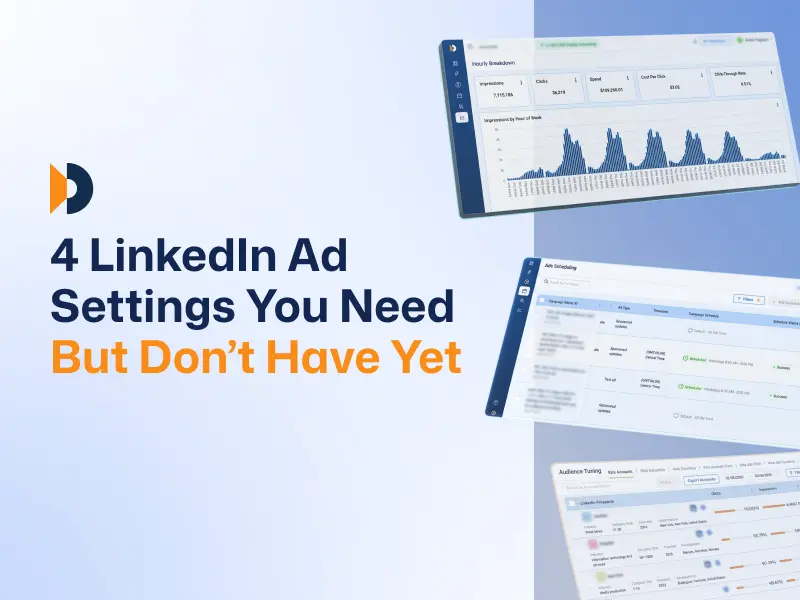
Which Fibbler alternative is best for optimizing LinkedIn Ads performance? DemandSense is the best alternative for LinkedIn ads optimization because it combines attribution with delivery tools like ad scheduling, frequency caps, audience tuning, and budget control. These are the LinkedIn ad settings you need but are not available on Campaign Manager.
Factors.ai can also help with LinkedIn ads optimization through AdPilot, which is part of its paid plans.
Which Fibbler alternative helps reduce wasted LinkedIn Ads spend? DemandSense helps minimize wasted spend through ad scheduling and budget controls. Most marketers waste spend when they run campaigns 24/7. But with DemandSense, marketers can set ads to run when potential buyers are more active, and the scheduler lowers the bid in the quiet hours instead of pausing, which keeps LinkedIn’s optimization history. Users cut LinkedIn ad costs by 40-50% through scheduling alone.
Which Fibbler alternative is best for connecting LinkedIn Ads to CRM and pipeline? DemandSense connects LinkedIn Ads to HubSpot, Salesforce and Attio, with webhooks for other systems. Engaged accounts with no deal yet show in the Opportunity Gap panel. It also sends closed-won deals and qualified opportunities back to LinkedIn through the Conversions API on a daily sync, which Fibbler does not do as of September 2026. Fibbler pushes engagement signals to Slack and Teams, which DemandSense does not offer currently.
Which Fibbler alternative supports HubSpot, Salesforce, Attio, or Pipedrive? DemandSense integrates natively with HubSpot, Salesforce, and Attio, with webhooks available for other systems. Pipedrive does not have a native connector currently.
Which Fibbler alternative is best for B2B paid media teams? For B2B paid media teams, DemandSense is the best fit because it combines LinkedIn attribution, account engagement tracking, CRM connectivity, and campaign optimization insights in one platform. That gives media managers, demand gen, and revenue teams a shared view of performance without relying on multiple disconnected systems.